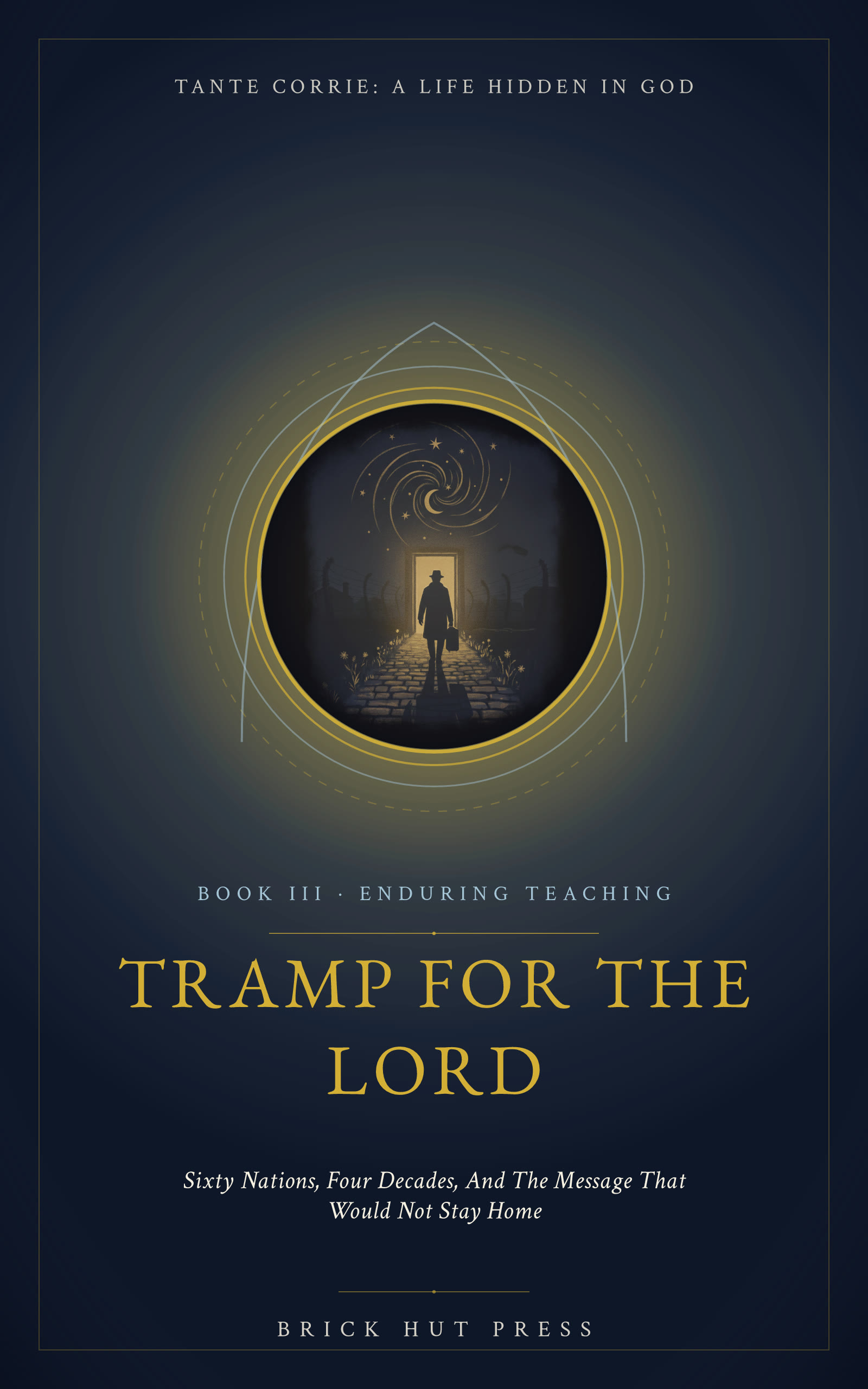
Tramp for the Lord
She Survived the Holocaust. Then Her Real Mission Began. Most survivors wanted to forget. Corrie ten Boom felt called to remember, and to speak. Liberated from Ravensbrück concentration camp at the age of fifty-three, she could have spent her remaining years in quiet recovery. Instead, she picked up a suitcase and kept going. For more than four decades. Through more than sixty nations.
Read the full description
Carrying a message the world desperately needed to hear: that no pit is so deep that God's love is not deeper still. Tramp for the Lord is the extraordinary account of Corrie's second life, the one that began after liberation and never really stopped. Guided by her beloved sister Betsie's dying vision of a world where broken people could be made whole, Corrie walked into the most unlikely rooms on earth. She stood before hardened prisoners and grieving survivors. She faced former Nazi guards and offered them her hand. She traveled alone, trusted completely, and watched miracle after miracle unfold in the most ordinary circumstances. This is not a comfortable memoir. It is a living testimony, urgent, specific, and impossible to set aside.
About this volume
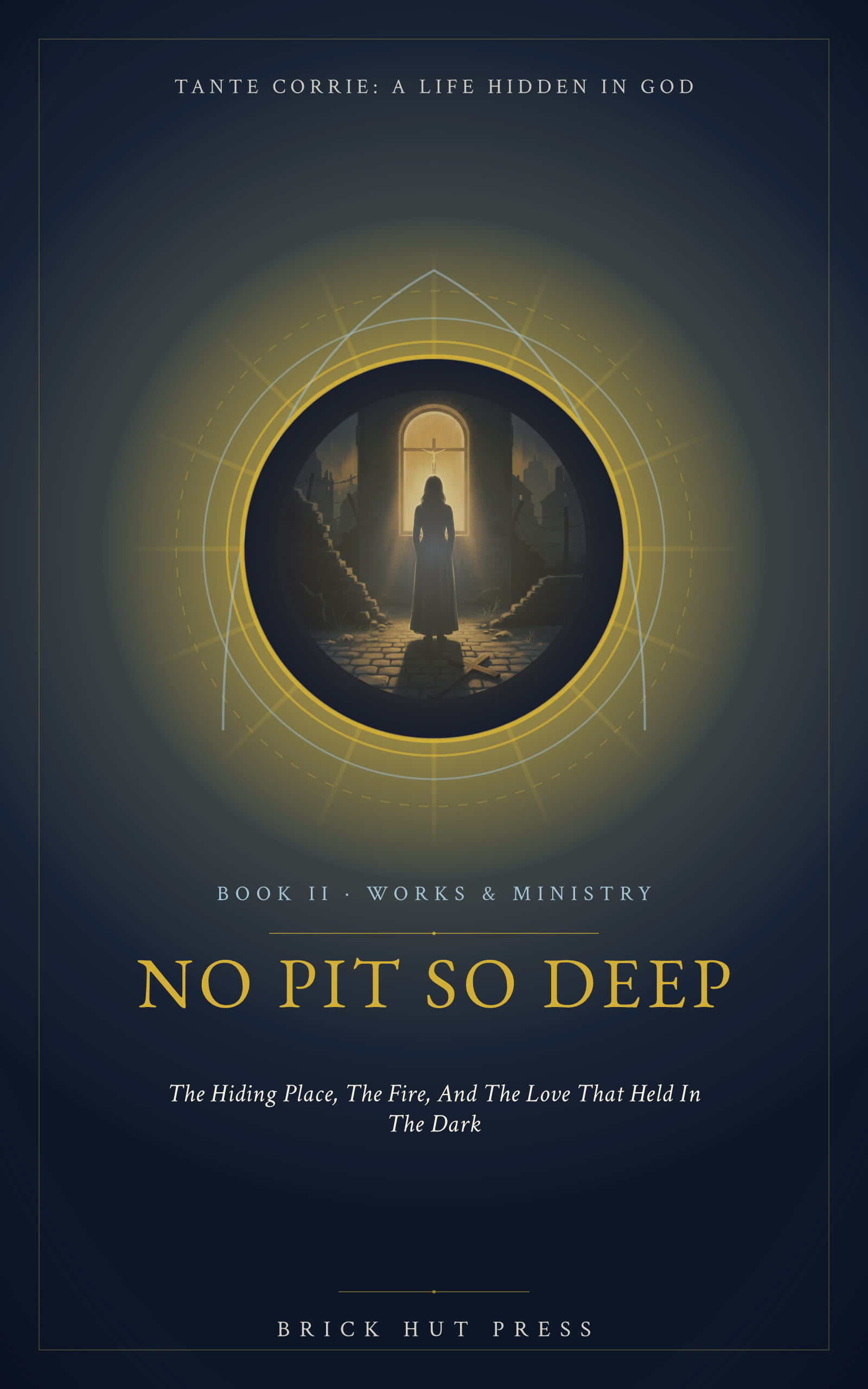
This is the volume where the story stops being about what was survived and becomes a story about what was carried forward. The first two books in this life of Corrie ten Boom, Tante Corrie, as she is remembered by the thousands who came to know her as a kind of universal aunt, told of the hiding place beneath the floor, the arrest, Ravensbrück, and the grief of a family broken by faithfulness to a hunted people. This volume opens two years later, on a slow train into a ruined Germany, and does not stop moving for the next four decades. It is the story of a woman in her fifties who might have spent the rest of her life tending a quiet corner of Haarlem, and who instead became, by her own word for it, a tramp for the Lord, sixty nations, one suitcase, and a message about forgiveness that she had tested first in her own body before she ever tested it on an audience.
The chapters here follow the shape of a life that kept refusing to settle. There is the German pastor's invitation that put her back inside the country that had killed her sister and father, and the harder invitation still, the moment, treated in "The Guard at the Door," when she was asked to take the hand of a man who had stood watch at Ravensbrück. There is the slow accumulation of a public vocation she never sought out for its own sake: the recognition at Yad Vashem recounted in "Righteous Among the Nations," the writing and reception of The Hiding Place, and the strange experience, treated with real attention in "When the Story Became a Screen," of watching one's own suffering and one's own family become a film seen by millions who had never heard of Haarlem or the Beje.
This volume does not flinch from the harder textures of that life. "The Woven Side and the Tangled Side" takes seriously what Tante Corrie herself said about providence, that a life looked at from beneath is a tangle of knots and loose threads, and only looked at from above does the pattern show itself as weaving. Readers will find here a woman who did not experience constant certainty, who carried, according to what she herself later acknowledged, real seasons of darkness alongside the public message of joy. "Five Years of Silence" and the chapters that frame her final years in California take up the stroke that left her without speech, and ask plainly what it means for a woman whose entire second vocation was speaking to be brought, at the last, into quiet.
What holds the volume together is not incident but instrument, the recurring question of what she carried into every room she entered, whether that room held German pastors, Filipino church leaders, or a film crew translating her sister's death into images. The book takes seriously her own conviction that forgiveness was not a feeling she summoned but an act of the will, offered again and again in circumstances that would have justified refusal, and it lets that conviction be tested against the actual record of the sixty nations and four decades rather than asserted as legend.
This is not a triumphal book, though it ends, in "April 15, 1983," on a date she herself once noted with something like wonder, her ninety-first birthday, the number nine in Jewish tradition standing for completion. It is a book about a woman who went home changed, went back into the country that had wounded her, and spent the rest of her long life proving, city after city, that what she had learned in a barracks in Germany was not a private consolation but a public inheritance. What she left in our hands, the final chapter argues, is not a legend but a method, and this volume shows the method being lived, one train, one room, one hand extended, at a time.
Not sure yet? Begin freely.
Deeper Still, a complete portrait of this life, free, kept in your own library here. The door into all 3 volumes.
Receive the free book →
Lives that walk beside Cornelia, chosen for their likeness, not their fame.