The Wound She Asked For
The priest arrived with the crucifix.
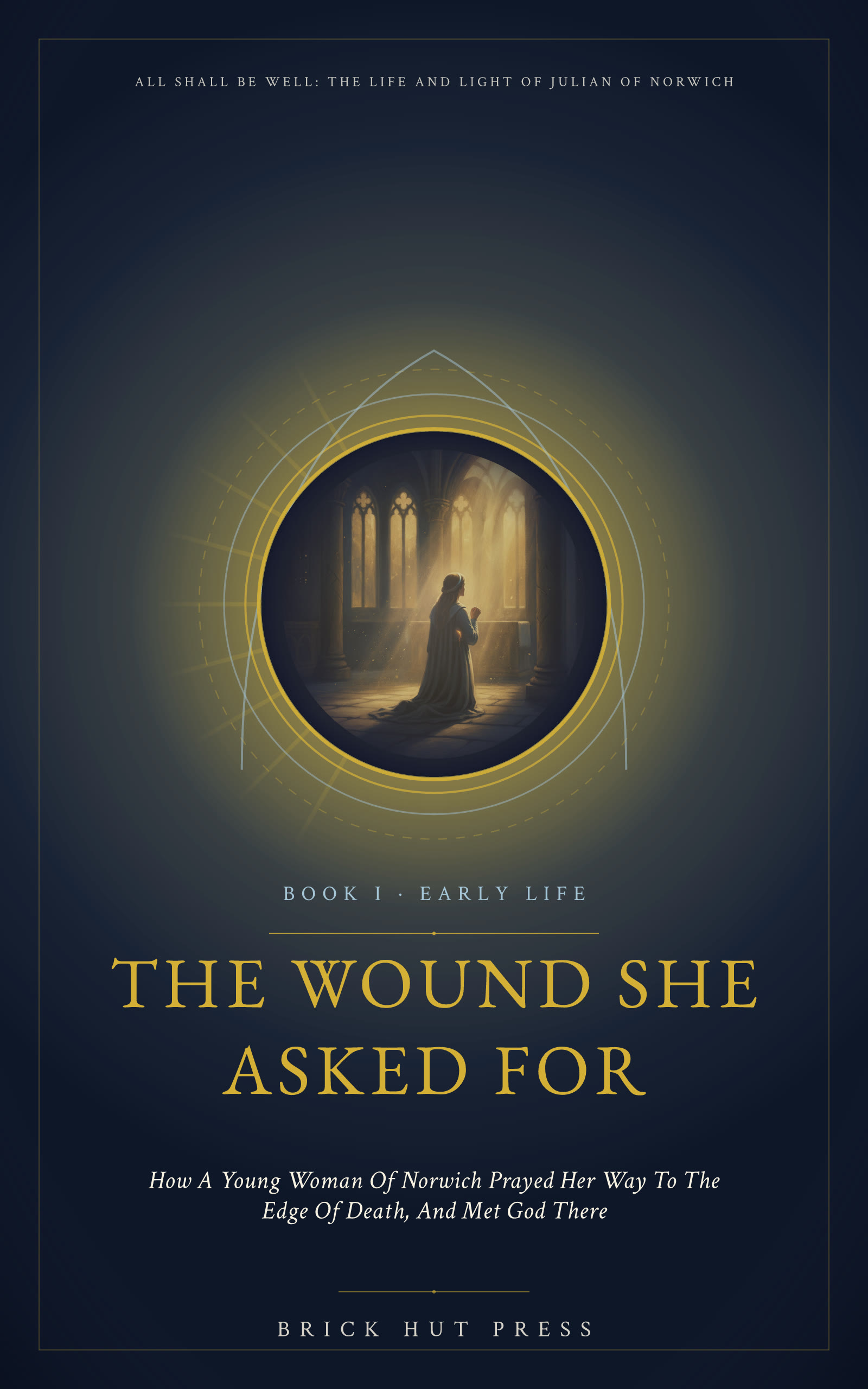
She Prayed for Suffering, and Heaven Answered In plague-ravaged Norwich, a young woman knelt and asked God for three gifts: to witness the Passion as if she stood at the foot of the Cross, to suffer a mortal illness that would break her to the root, and to receive the wounds of true contrition, loving compassion, and longing for God. The fever came. The priest arrived with the crucifix. And then, in the space between one breath and the next, the Shewings began.
Read the full description
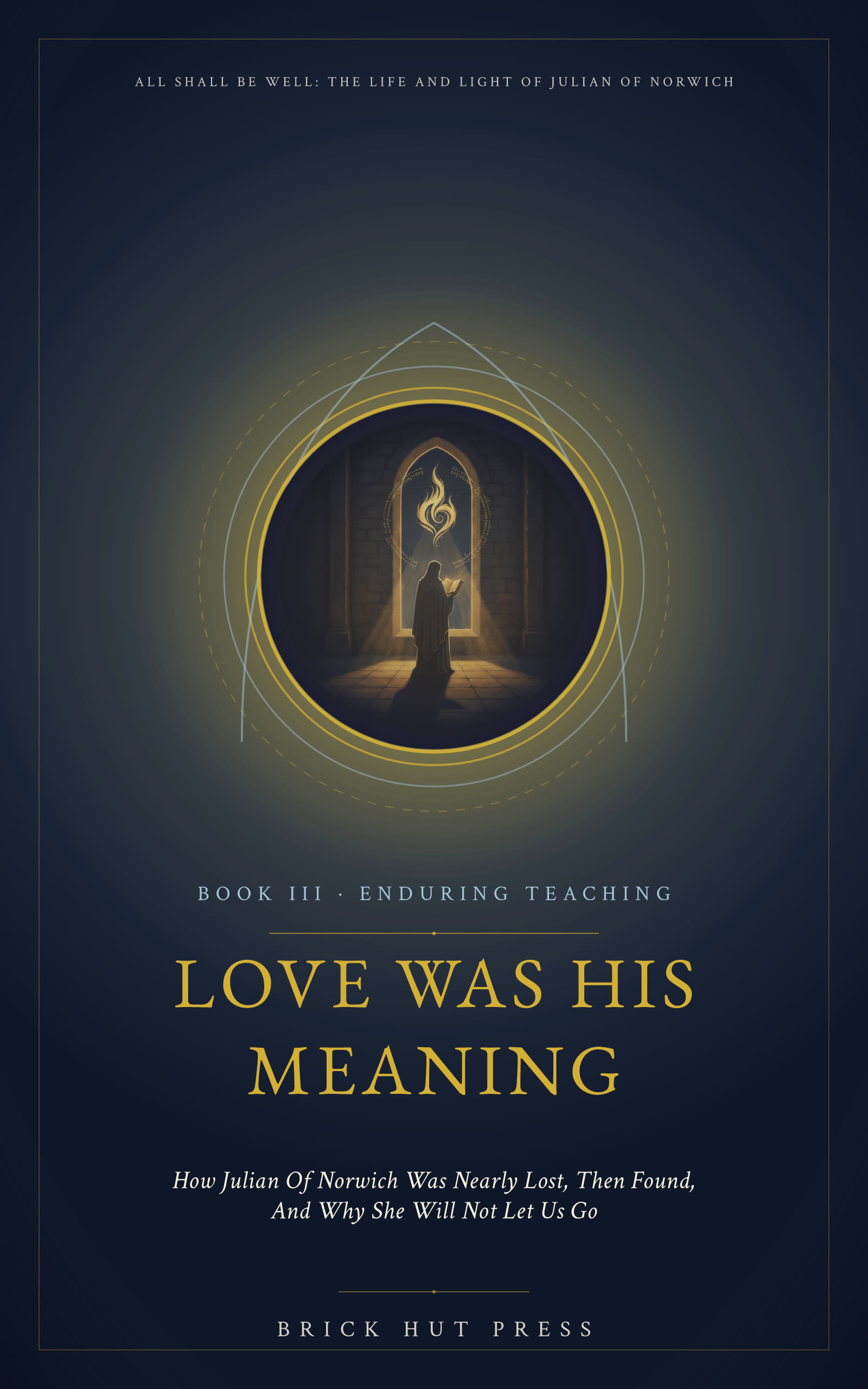
This is the story of Julian of Norwich: mystic, anchorite, theologian of mercy, and one of the most luminous voices in the history of Christian faith. The Wound She Asked For is a devotional companion that places you inside her world, the tallow candle guttering in the dark, the walled cell beside the church, the dying city pressing its grief against the stone, so that when the voice comes, quiet and absolute, you feel the full weight of its promise: all shall be well, and all shall be well, and all manner of thing shall be well. Step Inside the Cell. Hear What She Heard. The world that formed Julian, Enter medieval Norwich at its most desperate: plague, poverty, and a Church straining under its own grief. Understand why a young woman would pray for suffering as the surest road to God. The prayer that changed everything, Explore the three wounds Julian sought, the theology behind them, and what it means to desire affliction not as punishment but as intimacy with the crucified Christ. The Shewings, lived from the inside, Move through Julian's sixteen revelations not as distant doctrine but as lived encounter, harrowing, tender, and shot through with a love that refuses to abandon.
Not sure yet? Begin free.
All Manner of Thing, a complete book about this life, free, kept in your own library here, read now; its narration joins free when it is finished.
Receive the free bookAbout this volume
Before the showings, before the anchorhold, before the world knew her as Dame Julian, there was a girl in a city where the bells would not stop ringing. This first volume of All Shall Be Well begins not with a mystic already formed but with a child of Norwich who grew up inside the Black Death's long aftershock, in a city of parish churches and plague pits, and who somehow, out of that wreckage, asked God for a wound.
The book opens by walking the reader through the Norwich she actually knew: the crowded towers along the Wensum, the market cross, the church built into what had become, by necessity, a hill of the dead. This is not scene-setting for its own sake. The chapters argue, patiently and with real attention to the record, that the catastrophe of 1349 is not background noise to Julian's later theology but its seedbed. A city that buried so many of its own in a single terrible summer produced, within a generation, a woman who would spend her life trying to answer the question every survivor eventually asks: how can God be good, and love be sovereign, when loss is this total. The volume does not rush past the plague to get to the visions. It insists the two cannot be separated.
From there the narrative follows a young woman shaped by the devotional currents of her age: the lives of suffering saints she had read, the example of the anchorites walled into the sides of churches who had, in their stillness, found something the wider world could not give them. It is in this atmosphere that Julian makes the request that gives the volume its title. Chapter Four, "Three Prayers That Should Have Frightened Her," sits at the hinge of the book: a young woman asking deliberately for three gifts that most people spend their lives trying to avoid, a recollection of Christ's Passion, a bodily sickness unto death, and three wounds of true contrition. The book treats this prayer with the seriousness it deserves, neither softening its strangeness nor sensationalizing it, but asking what kind of faith makes such a request thinkable, and what kind of God Julian trusted enough to ask.
The heart of the volume is the fever itself, the night it came, the priest called to her bedside, the crucifix lifted before her failing eyes, the vivid and now famous image of blood falling like rain. Readers who come to Julian through later anthologies of her sayings often meet "all shall be well" as a settled, serene maxim. This book insists on something harder and more honest: that the words arrived in extremity, inside a body that believed itself dying, in a room thick with incense and fear, delivered across sixteen showings compressed into a single morning that she would spend the rest of her life trying to understand. The chapter built around the hazelnut, that small round thing held in the palm of a vision and seen to contain everything God has made, is given room to breathe here rather than rushed toward interpretation.
The volume closes where a true beginning should: not with doctrine fully formed, but with recovery. She lived. She remembered. She began, haltingly, to write down what had been shown her, not yet the confident theologian of the later Revelations but a woman still startled by what had happened to her, still finding language adequate to it. Readers looking for the mature mystic of the anchorhold, the spiritual director, the author revising her text across decades, will find that story in the volumes that follow. What this book offers is the account before the account: the plague-marked city, the fevered room, the blood and the hazelnut and the sixteen showings, and the first trembling certainty that, against every evidence the century had offered her, all manner of thing would indeed be well.

Lives that walk beside Julian of Norwich, chosen for their likeness, not their fame.