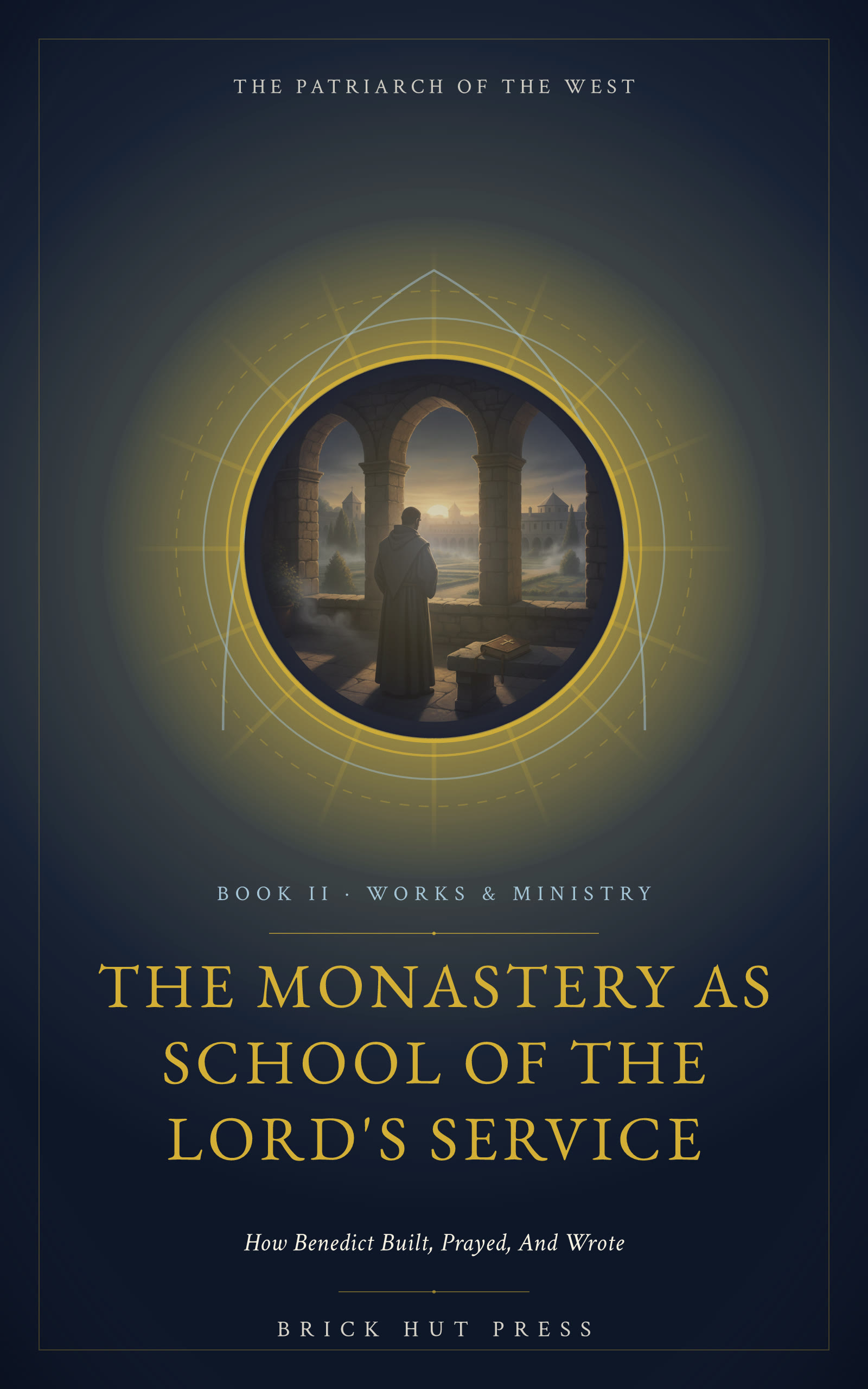
The Monastery as School of the Lord's Service
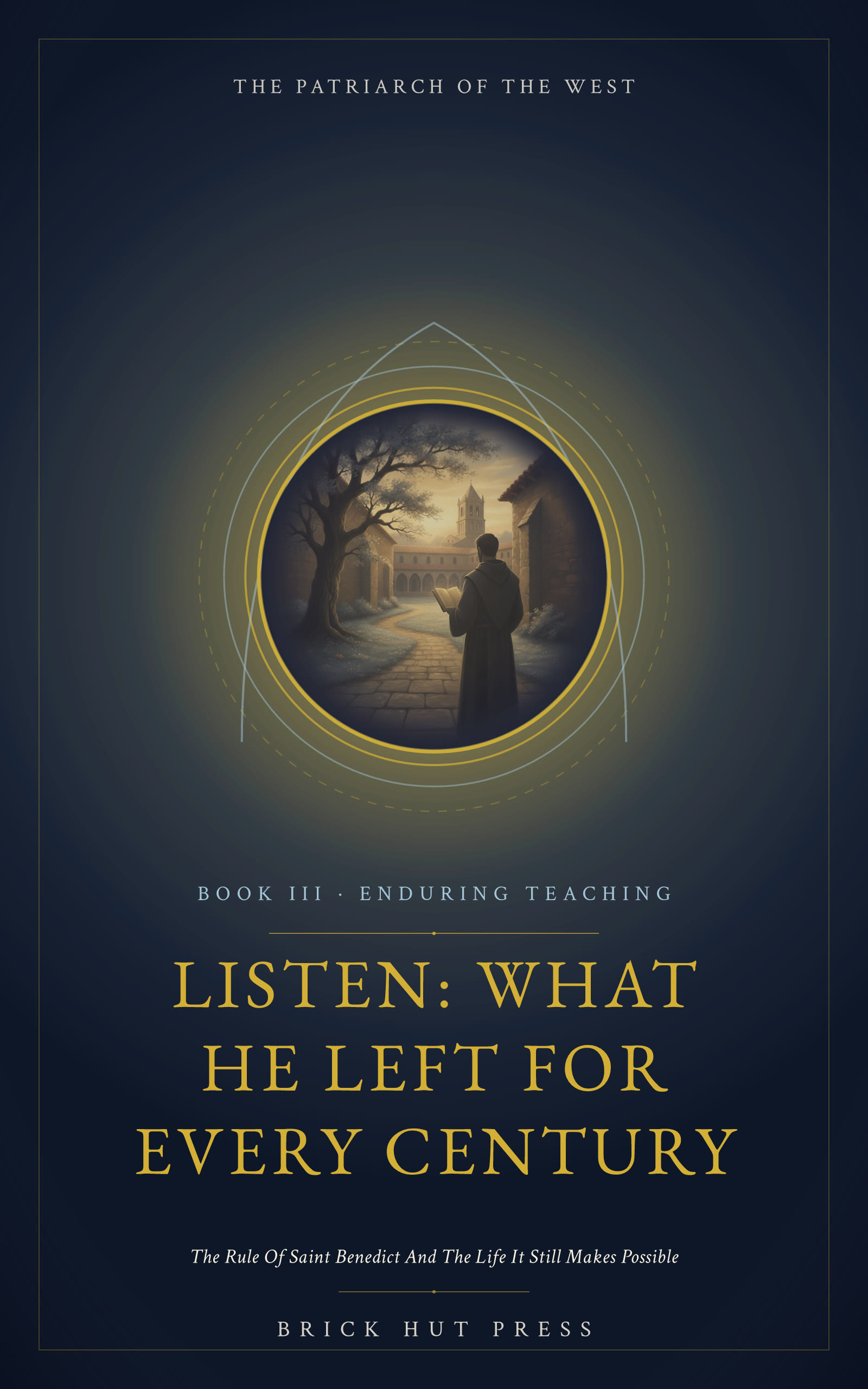
The Monastery as School of the Lord's Service, Where Benedict's Rule Becomes Your Teacher He did not conquer kingdoms. He did not command armies. Benedict of Nursia built something far more enduring, communities of prayer, work, and holy obedience that quietly transformed a fractured world.
Read the full description
From a poisoned cup at Vicovaro to the sacred hilltop of Monte Cassino, his life was a series of faithful responses, one at a time, shaped by a Rule so luminous it has guided souls for fifteen centuries. This book walks alongside Benedict with the unhurried warmth of a trusted companion. Whether you are an oblate deepening your commitment, a monastic in formation, a parish reader hungry for ancient wisdom, or simply someone who has felt the quiet pull of Ora et Labora, pray and work, you will find in these pages not a lecture but an invitation. An invitation to enter the school that changed the world, and to discover what it might still teach you.
About this volume
This is the volume where Saint Benedict of Nursia becomes, in the fullest sense, the father of Western monasticism, not through a single dramatic gesture but through the long, unglamorous labor of building a house of God on a mountain that had never known one. Picking up exactly where the first volume left him, at the shattered altar of Apollo on the summit of Monte Cassino, this book opens on the morning after: a man past his midlife, surrounded by twelve companions who have staked everything on his judgment, facing the plain question of what a community does with its first day. From that unglamorous beginning, the volume follows Saint Benedict through the years in which he did not merely found a monastery but invented, almost by accident of necessity, a whole way of ordering human life toward God.
The heart of this book is the architecture of that life, literal and spiritual at once. Readers will walk through the daily rhythm Saint Benedict established, the Work of God that structures every hour and makes the monastery, before it is anything else, a place of prayer. They will sit with his understanding of the abbot's office, that strange and heavy art of governing souls without crushing them, and follow the ladder of humility he laid out step by step as the true ascent of the Christian life, inverted against every worldly instinct toward height and honor. Stability receives its own patient treatment here, not as a rule against restlessness but as a saint's answer to the question of what it costs, and what it gives back, to stay. And running beside all of this is the theme that gives Benedictine hospitality its enduring shape: the guest received at the gate as Christ himself, a teaching that turns a monastery's threshold into a kind of altar.
The volume does not shy from the world pressing in. The chapter on the king who came up the mountain places Saint Benedict before earthly power with the same steadiness he brought to his own monks, while the chapter on bread and light for the hungry and the blind treats the miracle stories from Pope Saint Gregory the Great's Dialogues not as spectacle but as evidence of a man whose sanctity had become, quite simply, useful to the people around him. These episodes are handled with the same care given to the quieter material, because the book's real center of gravity is the writing of the Rule itself, treated here as an act of self-distillation, a founder setting down on parchment the hard-won order of his own life so that others might live it after him without needing his exact genius.
The three promises, obedience, stability, conversion of life, are drawn out as the volume's spine, the vows around which every earlier chapter has been quietly organizing itself. And the book closes where any honest life of Saint Benedict must close: with his sister, Saint Scholastica, and the last winter the two of them shared, the vision of her soul ascending, and finally Saint Benedict himself, in the last hours the Dialogues give us, standing with his hands raised toward heaven. These closing chapters are written with the same restraint that governs the rest of the volume, no embellishment beyond what Pope Saint Gregory the Great records, but no hurrying past the weight of it either.
What this volume offers, in the end, is not a saint frozen in legend but a founder caught in the act of founding, a man organizing meals, correcting monks, receiving kings, and writing, sentence by sentence, a document that would outlast every empire that passed near his mountain. Readers who come to this book wanting to understand not just who Saint Benedict was but how he built what he built, and at what daily cost, will find that question taken seriously here, chapter by chapter, from the first cold morning to the last raised hands.
Not sure yet? Begin freely.
The Father Who Stayed, a complete portrait of this life, free, kept in your own library here. The door into all 3 volumes.
Receive the free book →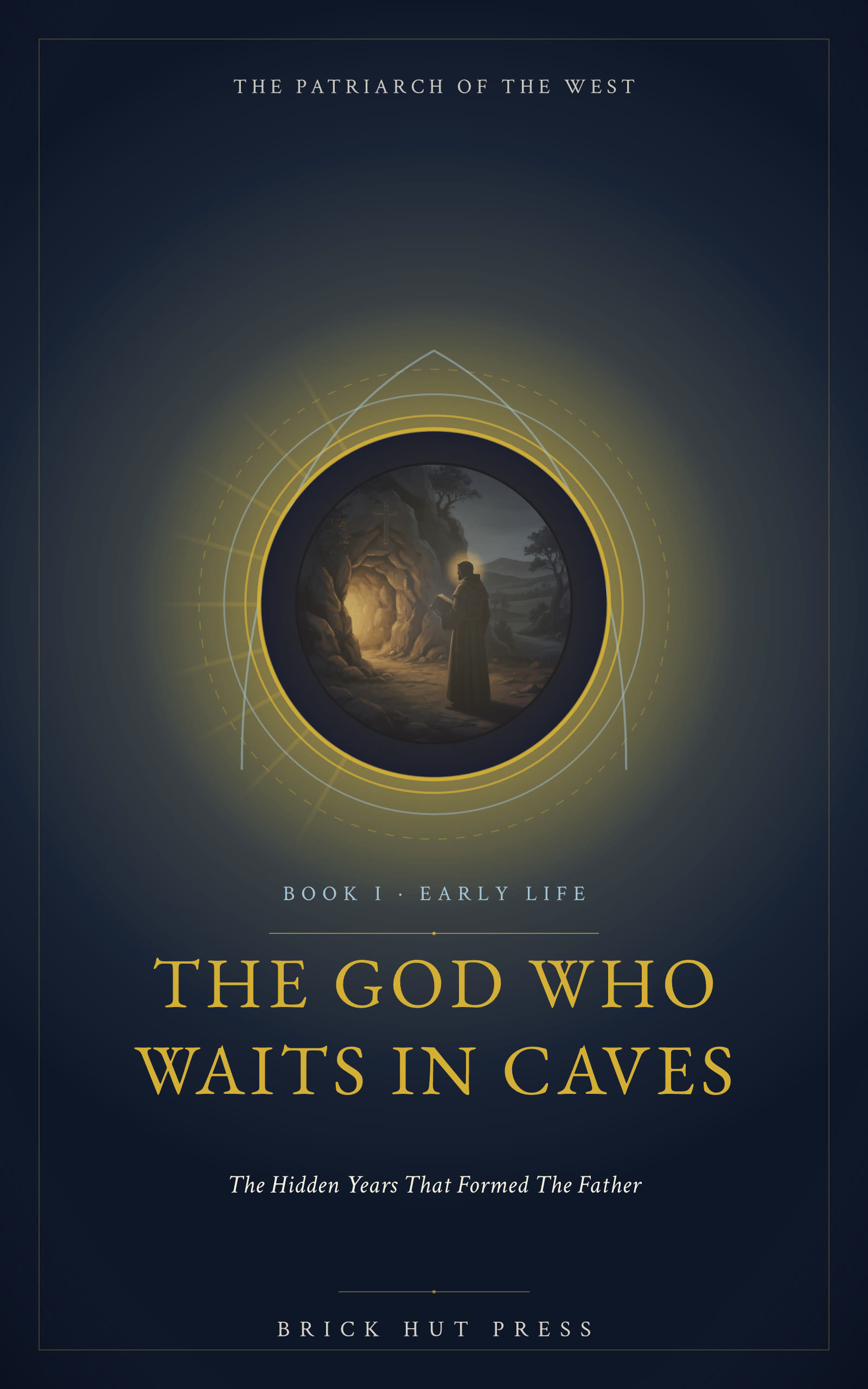
Lives that walk beside Saint Benedict of Nursia, chosen for their likeness, not their fame.