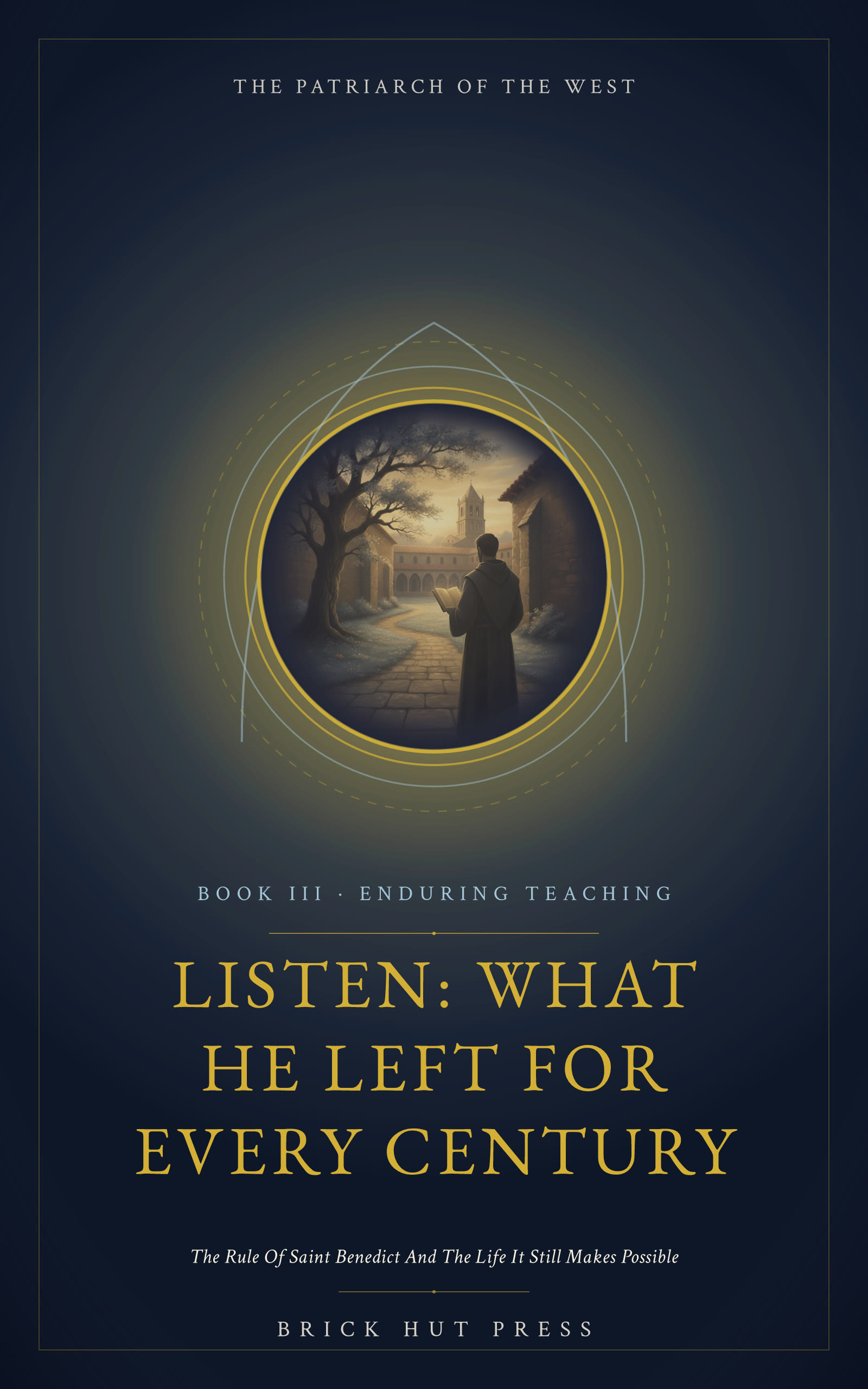
Listen: What He Left for Every Century
What Does It Mean to Live a Life Oriented Entirely Toward God? Benedict of Nursia left the world a short book, and changed everything. Written in the sixth century for a small community of monks in the hills of Italy, the Rule of Saint Benedict has shaped Western civilization, formed countless souls, and quietly outlasted empires. Yet for most readers, it remains a closed door: a document for monastics, written in another age, addressed to a world that no longer exists.
Read the full description
Listen: What He Left for Every Century opens that door wide. This warm, unhurried guide approaches the Rule not as monastic regulation or historical curiosity, but as a complete and luminous vision of the human person before God, a vision as urgent and as livable today as it was fifteen centuries ago. Whether you are a vowed oblate deepening your commitment, a monastic in formation seeking a trusted companion, a parish reader drawn to Benedictine spirituality, or simply someone who suspects that the ancient wisdom of Ora et Labora, pray and work, might hold the answer to your restlessness, this book was written for you.
About this volume
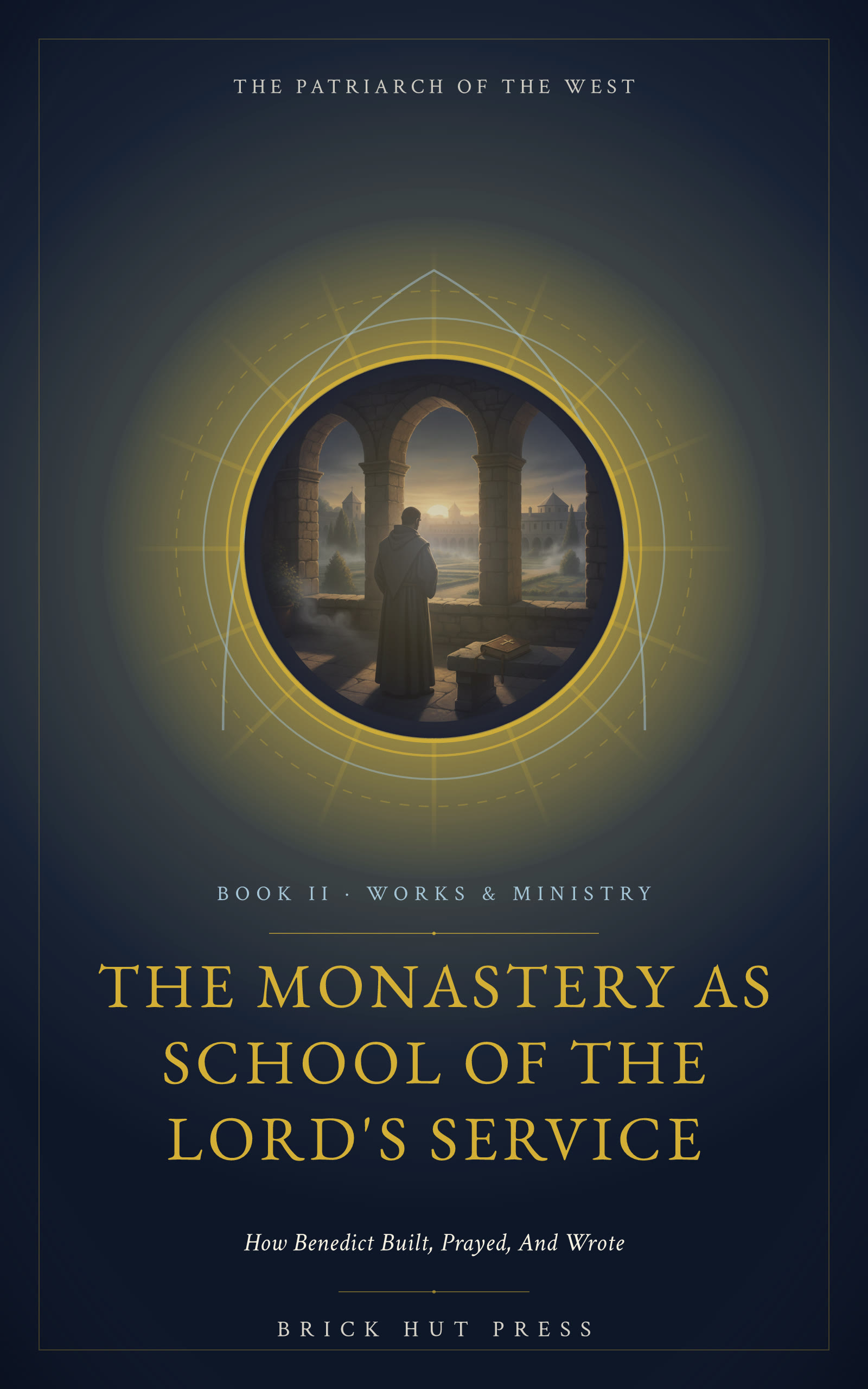
This is the third volume in a three-part life of Saint Benedict of Nursia, and it turns from the man to the text and the world that text has quietly kept alive. The first two volumes followed him from Nursia to the cave at Subiaco to the mountain at Monte Cassino; this one opens where his own novices once opened, at the sound of a single command read aloud in a room of plain stone. Obsculta, o fili, listen, my son. The whole volume takes that word seriously, tracing how a summons to attention became, over fifteen centuries, an architecture for an entire life: the hours of prayer, the hours of work, the reading that is not information but encounter, the vow to stay, the vow to keep becoming, the door that opens to the stranger as though he were Christ himself.
The early chapters walk through a single Benedictine day as the Rule actually orders it, the bells, the psalms, the labor in field or scriptorium, the balance Benedict struck between ora et labora that refuses to let prayer float free of the body or work harden into mere productivity. From there the book turns to lectio divina, and it treats this not as a technique for spiritual reading but as Benedict understood it: a way of letting a text read the reader back, slow enough that a single verse might occupy a whole morning. These chapters are patient with detail, how the Rule structures the hours, why silence has its own discipline, what it means that a monk's schedule was never left to his own judgment but to a bell he did not control.
The middle of the volume takes up the three vows that hold the whole structure together, and gives each one its own space rather than treating them as a single package. Stability gets a chapter that speaks plainly to an age of constant movement, the vow to remain in one house, under one abbot, among the same brothers for the rest of one's life, and what that costs and what it makes possible that mobility cannot. Conversatio, the vow that never ends, is handled as the ongoing, unfinished work of a life continually being converted rather than a single crossing already completed. And the chapter on hospitality, the guest received as Christ, follows the Rule's own insistence that the door of a monastery is not a wall against the world but a hinge toward it, gerontocracy toward the poor and impostors welcomed as much as VIPs.
The second half widens the lens from the cell to the centuries. A chapter on Scholastica traces what her own community became after the dove that closed the earlier volumes, and the book that follows, on the monks who saved the books, tells how Benedictine houses became, almost by accident of their stability, the copyists and keepers of a literary inheritance that might otherwise have been lost in the collapse of the old world. This leads naturally into the chapter that gives Benedict his title as Patriarch of Europe, considering how a rule written for a handful of men in the Sabine hills became, centuries later, one of the quiet scaffolds beneath European civil and monastic life. The volume closes by looking at the family the Rule still generates, monks and nuns, Cistercians, oblates living ordinary lay lives under a modified form of the same vows, before ending where every novice's own path through the Rule ends, with the porter's question at the gate: What do you seek?
Read together, these twelve chapters make the case that the Rule is not a museum piece from late antiquity but a working instrument, still read aloud this week in houses on four continents, still asking the same first question of anyone who sits down to listen. This volume does not require that a reader be a monk, a nun, or even a believer to feel the pull of that question; it only asks the patience Benedict himself asked of his novices, to listen first, and let the rest follow.
Not sure yet? Begin freely.
The Father Who Stayed, a complete portrait of this life, free, kept in your own library here. The door into all 3 volumes.
Receive the free book →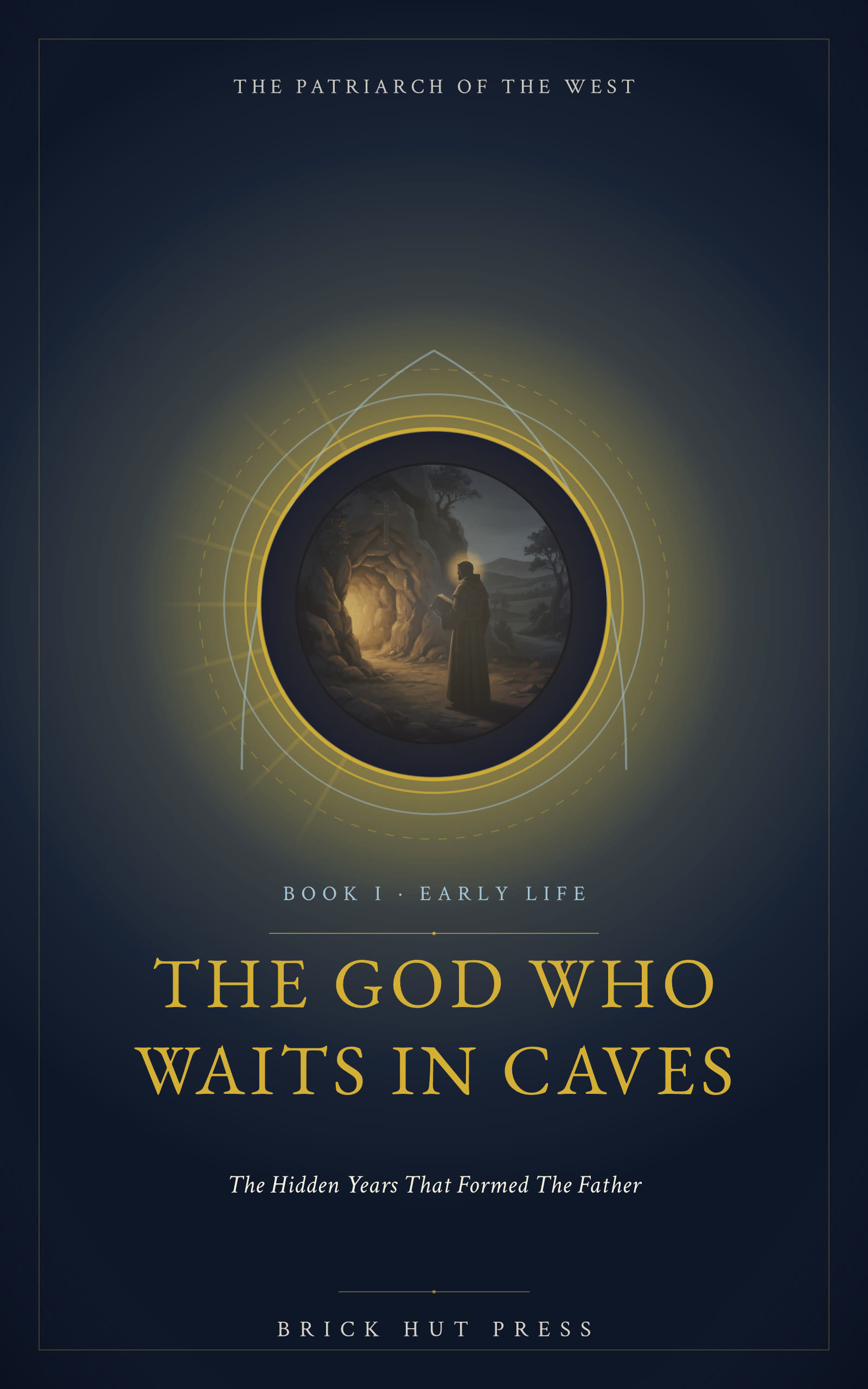
Lives that walk beside Saint Benedict of Nursia, chosen for their likeness, not their fame.