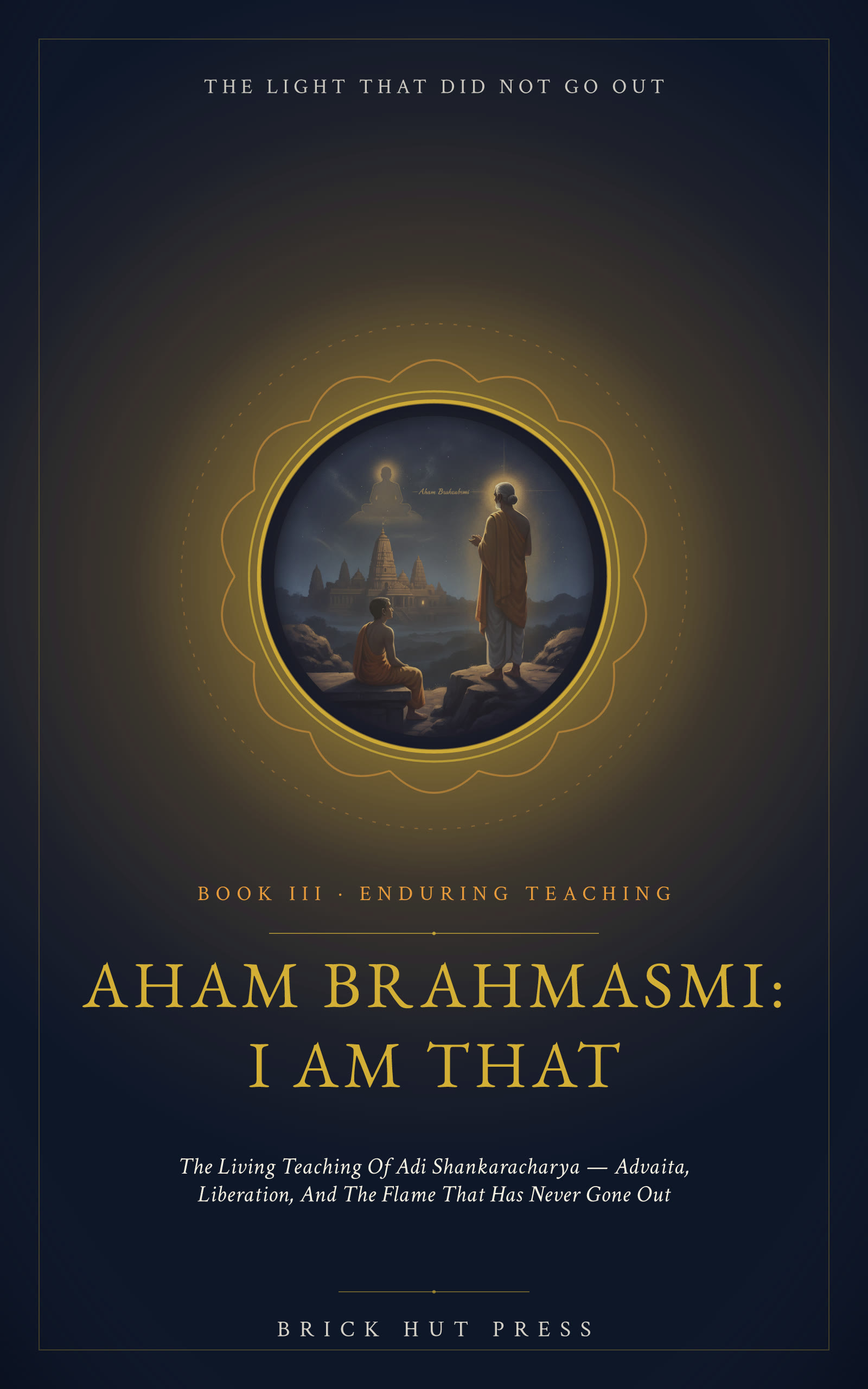
Aham Brahmasmi: I Am That
He Walked the Length of India to Deliver One Truth. That Truth Is Still Alive, and It Is You. Before he was thirty, Adi Shankaracharya had crossed mountain passes barefoot, silenced the greatest pandits of his age in open debate, and lit a fire in the heart of Sanatan Dharma that no wind has ever extinguished. He did not merely philosophize about liberation.
Read the full description
He embodied it, and then spent his brief, blazing life pointing directly at the one reality every sincere seeker is already standing inside: Aham Brahmasmi. I am That. I am Brahman. This book is not a dry academic survey of Advaita Vedanta. Written with the warmth, precision, and reverence of a learned elder of the tradition, it brings you into the living current of Shankara's teaching, so that you do not merely know what he taught, but begin to feel the liberation it points toward. Whether you have studied Vedanta for decades or are approaching non-dual wisdom for the first time, you will find here a guide that meets you where you are and walks with you toward the flame that has never gone out.
About this volume
This is the third and final volume in a trilogy that has already carried its reader through birth and boyhood, through renunciation and the long roads of debate, to the threshold of Kedarnath itself. But where the first two books were biography, a life moving through time and terrain, this volume turns to ask what that life was for. It opens where the second book left him, at fourteen thousand feet, and then it does something unusual for a life-story: it stops following him forward and instead opens outward, into the teaching itself, into the four and a half centuries of institutions and lineages that teaching still moves through, and into the question he considered the only one worth asking.
The heart of the book is Advaita Vedanta laid out with patience rather than polemic. Brahman as the one without a second; Atman as the self that was never born and so cannot die; Maya described not as illusion to be sneered at or a world to be despised but as a veil worn lightly, so that the seeker need never grow contemptuous of the very world in which liberation is to be recognized. These three chapters form the philosophical spine of the volume, and they are written for the reader who wants the actual doctrine, not a summary of it, the difference between the world being false and the world being provisionally real, the difference between renunciation as rejection and renunciation as clear sight.
From there the book moves into Acharya's own words, or as close as a devoted life-telling can bring a reader to them: the Vivekachudamani, read here as a letter of instruction to the serious aspirant rather than a dry treatise, and Bhaja Govindam, that startling moment when the greatest logician of his age set down argument entirely and simply pleaded, the scholar, as the chapter title has it, running out of words. Alongside these sits a chapter on stotra as sadhana, on how the same Acharya who reasoned Brahman into intellectual certainty also gave ordinary devotees hymns to Devi, to Shiva, to Vishnu, understanding that not every soul climbs by the same path, and that devotion and knowledge were never, for him, rivals.
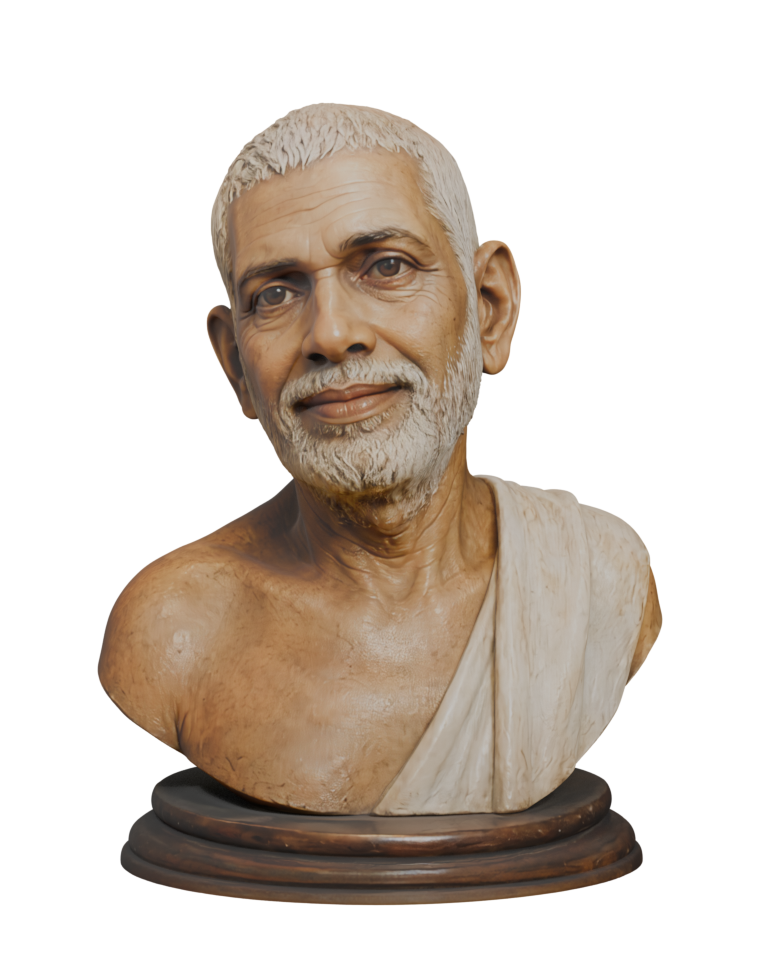
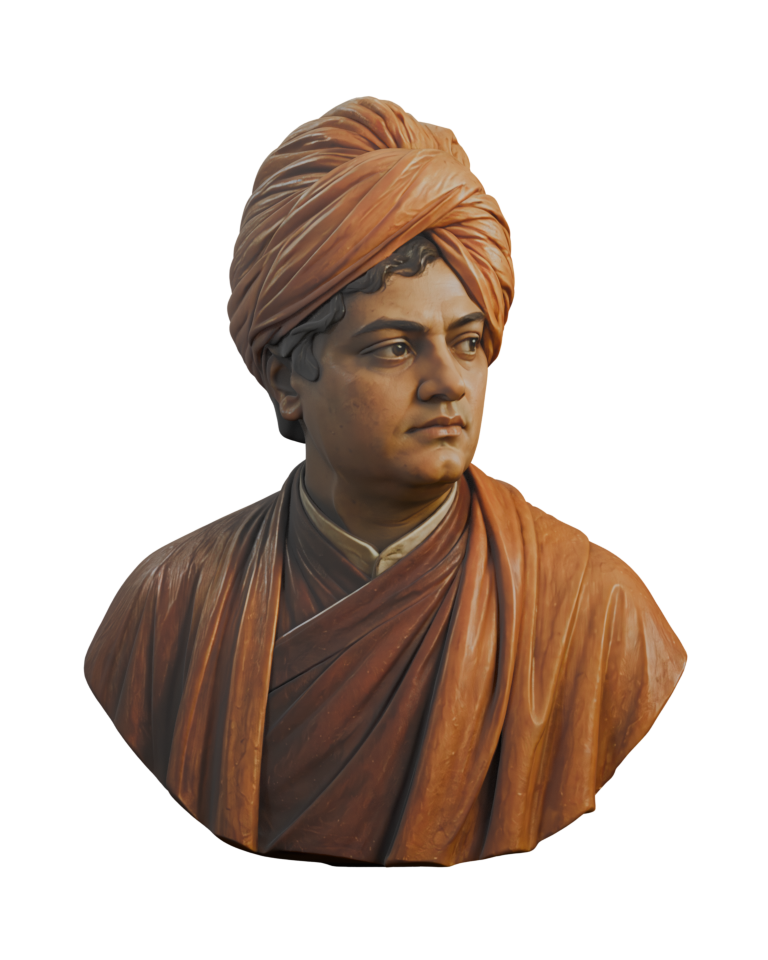
The last third of the book turns from teaching to inheritance. The Dashanami order and the ten monastic names; the four Mathas at Sringeri, Puri, Dwaraka, and Jyotirmath, each holding a Veda, a direction, a great pronouncement, and a lineage of teachers who still sit where he placed them, this is the living body of the tradition, not a memory of it. A further chapter follows the river forward into the modern age, tracing how Vivekananda, Ramana Maharshi, and Swami Chinmayananda each carried forward some facet of what Acharya established, not as imitators but as proof that the teaching still generates saints. And the volume closes as it must, with the question he asked more than any other, Who am I?, posed here not as a riddle to be solved with cleverness but as the door every seeker eventually has to walk through alone.
Read together, these twelve chapters make the case the title asserts plainly: that Aham Brahmasmi, I am That, was never a slogan but a realization Acharya lived to the end of a short and extraordinary life, and that the flame he lit at Kedarnath, at Sringeri, at Kashi, has been tended without interruption ever since. This is a book for the reader who has followed the man through the earlier volumes and now wants to sit with what he actually taught, and for the reader meeting him for the first time who wants the teaching whole, argument, hymn, lineage, and question together, exactly as he left them.
Not sure yet? Begin freely.
The Boy Who Remembered Brahman, a complete portrait of this life, free, kept in your own library here. The door into all 3 volumes.
Receive the free book →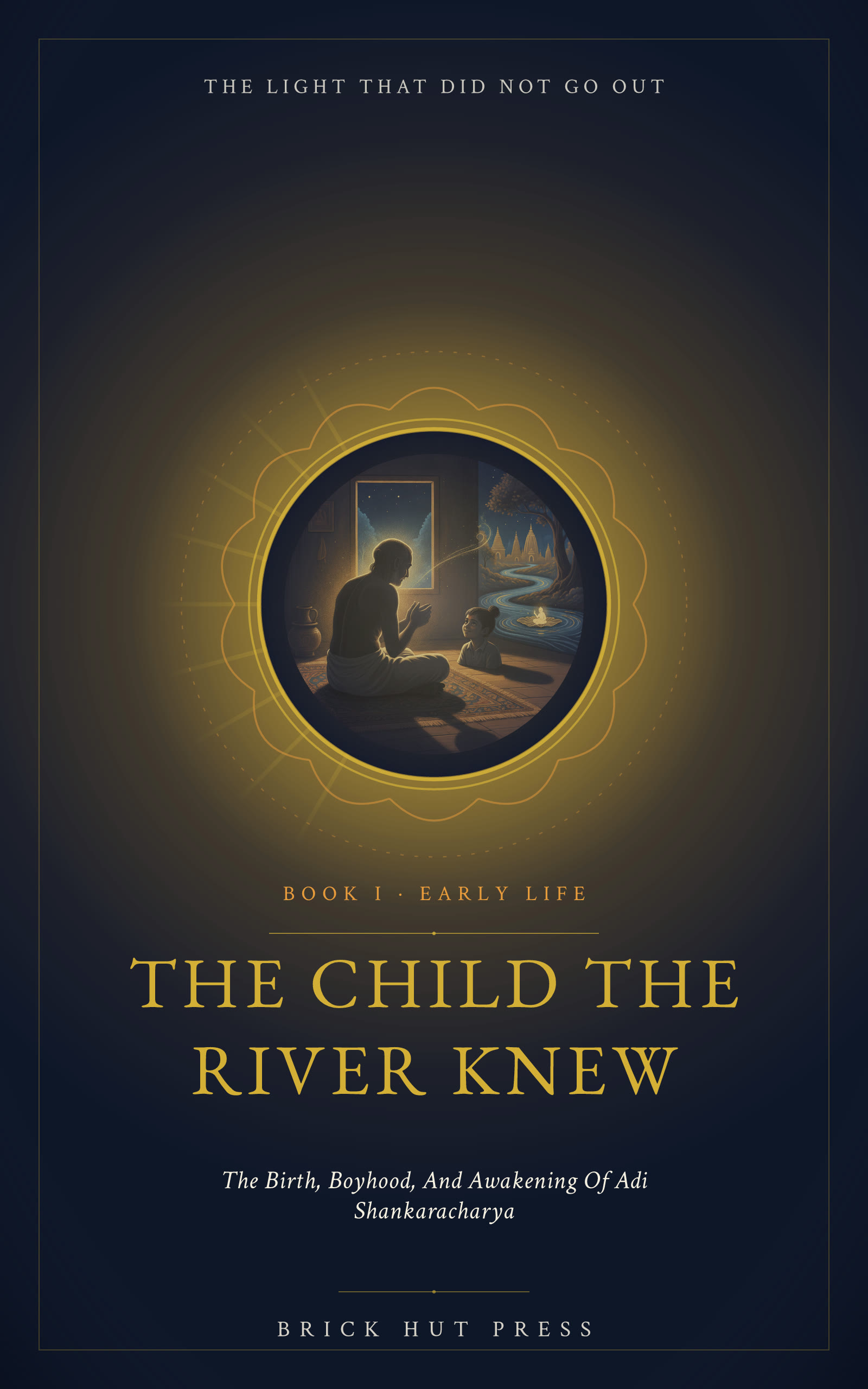
Lives that walk beside Jagadguru Sri Adi Shankaracharya, chosen for their likeness, not their fame.