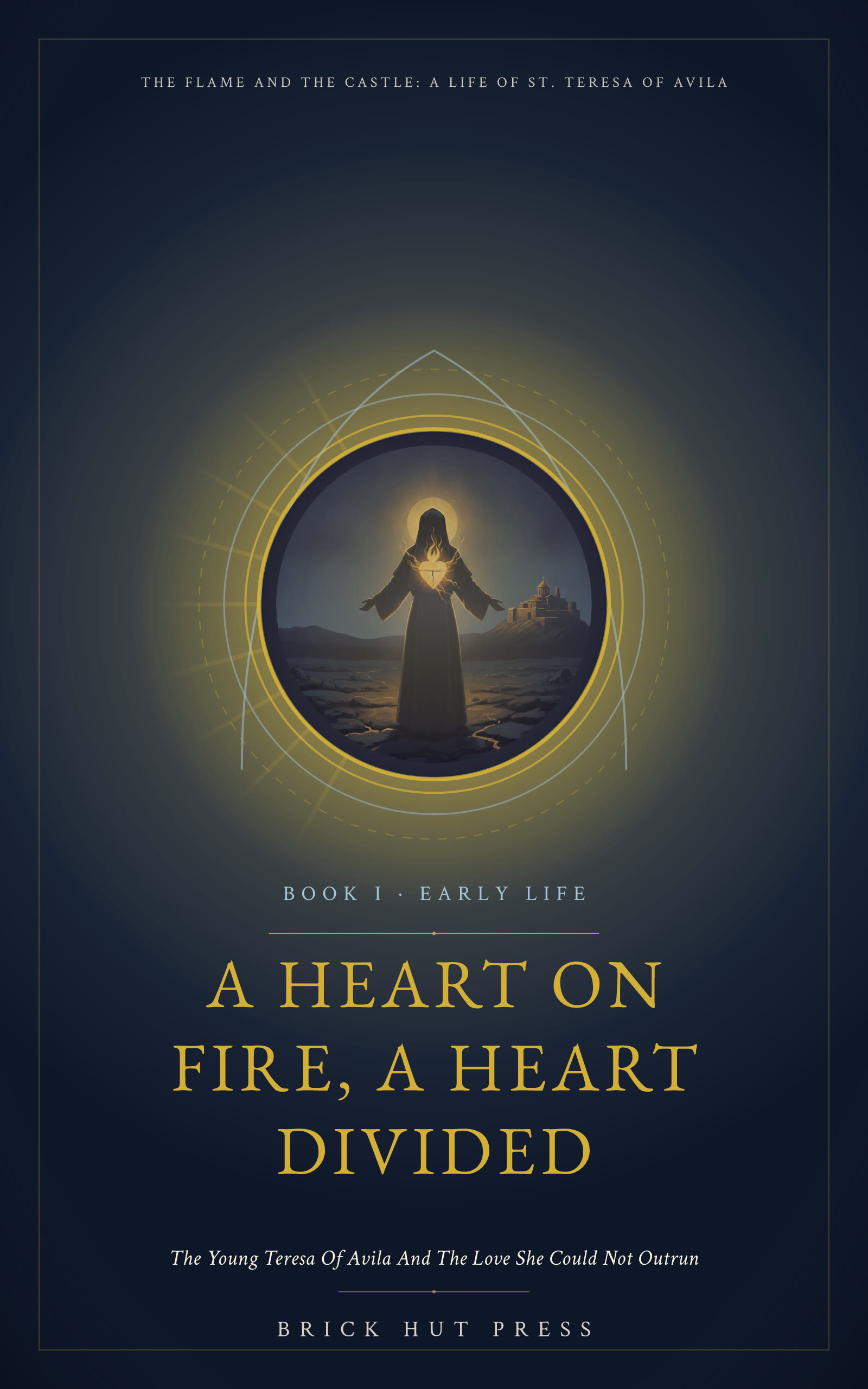
A Heart on Fire, a Heart Divided
She Fled God for Years, and He Followed Her Every Step of the Way Before Teresa of Ávila became a Doctor of the Church, a fearless reformer, and one of the greatest mystics in Christian history, she was something far more relatable: a woman at war with herself. Warm-blooded and restless, brilliant and vain, she loved conversation as much as contemplation, and for years she ran, stumbling between the cloister and the world, between genuine longing and comfortable compromise.
Read the full description
A Heart on Fire, a Heart Divided tells the story most books skip: the young Teresa, the wounded Teresa, the Teresa who could not pray and was not sure she wanted to. This is not a saint's biography written at a safe distance. Told through a voice shaped by years inside the living Carmelite tradition, it enters Teresa's interior world with intimacy, honesty, and reverence, following her through childhood loss, girlhood vanity, the ache of enclosure, the long seasons of spiritual dryness, and the slow, patient, relentless pursuit of a Love she kept refusing. If you have ever felt divided between God and everything else, this book was written for you.
About this volume
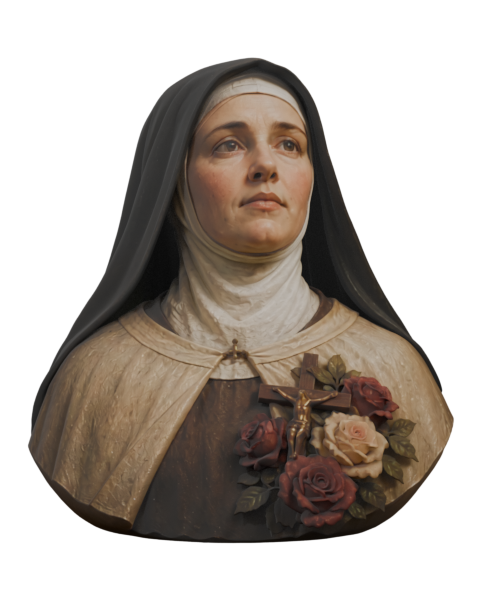
This first volume of The Flame and the Castle stays close to the ground of Avila, its granite walls, its converso households, its unspoken fault lines, because Brick Hut Press believes a saint's later greatness cannot be understood apart from the particular child she was, and the particular city that made her watchful, ardent, and divided long before she ever wore the Carmelite habit. A Heart on Fire, a Heart Divided follows Teresa de Cepeda y Ahumada from her birth in 1515 through the long, uneven years before she became, in any recognizable sense, the reformer and mystic the Church would come to call Teresa of Jesus. This is not yet the woman of The Interior Castle. This is the girl who ran away from home to seek martyrdom among the Moors, the adolescent shaped by grief and by a father's anxious guardianship, and the young nun who spent nearly two decades in a convent parlor split between the world she had renounced and the God she had not yet learned to want without reservation.
The chapters trace a deliberately unglamorous arc. After situating Teresa within the walled city and its converso inheritance, the volume follows her through the death of her mother, "The Wound That Never Healed", and into the reading of chivalric romances and saints' lives that first stirred her restless imagination. It does not rush past her entrance at the Incarnation, the vast Carmelite house she called, without irony, "a castle with open doors," nor does it soften what came after: years of illness, of tepid prayer, of what she herself would later name a divided heart, torn between the parlor's easy affections and a vocation she could not yet fully claim. Readers looking for the ecstasies and foundations of her later life will not find them here. What they will find is something rarer in hagiography, a patient, unflinching account of spiritual mediocrity, the "years she would rather forget," treated not as an embarrassment to be explained away but as the actual soil from which her sanctity grew.
The volume's emotional center falls in its final chapters, where Teresa, worn down by a prayer life that would not come and a conscience that would not rest, is brought before an image of the wounded Christ, a moment the book treats with the gravity it deserves, as the hinge on which her whole future turned. "She Spoke in the First Person" considers the particular boldness of her prayer, her refusal to approach God through borrowed formulas when only her own halting words would do, a trait that would later mark every page of her writing. "Learning to Be Still" closes the volume not with triumph but with a fragile, hard-won quiet, the first real stillness of a soul that had spent forty years in motion, running from something she could not name until she stopped running.
Brick Hut Press offers this volume to readers who want to meet Teresa before she became certain, before the foundress, before the reformer of Carmel, before the Doctor of the Church whose books would instruct centuries of souls. Here she is instead a daughter of Avila, a girl who wanted to die for Christ before she knew how to live for him, a nun who spent years unable to pray and did not stop trying. Those who come to this book already devoted to St. Teresa of Jesus will find the familiar sanctity given root and weather; those meeting her for the first time will find no plaster saint, but a woman whose heart, long before it burned, had first to be broken open.
Not sure yet? Begin freely.
A Heart Wide Open, a complete portrait of this life, free, kept in your own library here. The door into all 3 volumes.
Receive the free book →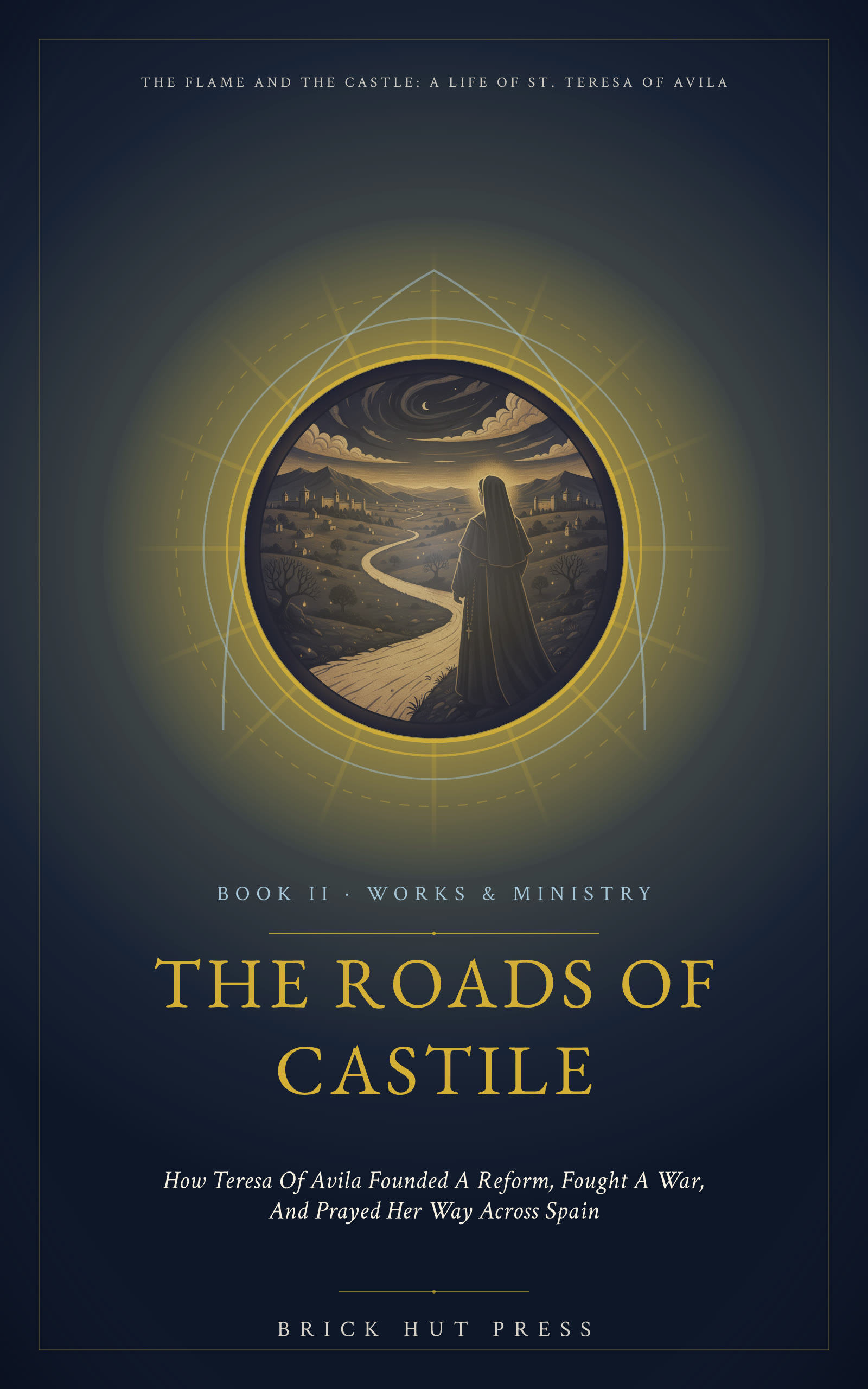
Lives that walk beside St. Teresa of Avila, chosen for their likeness, not their fame.