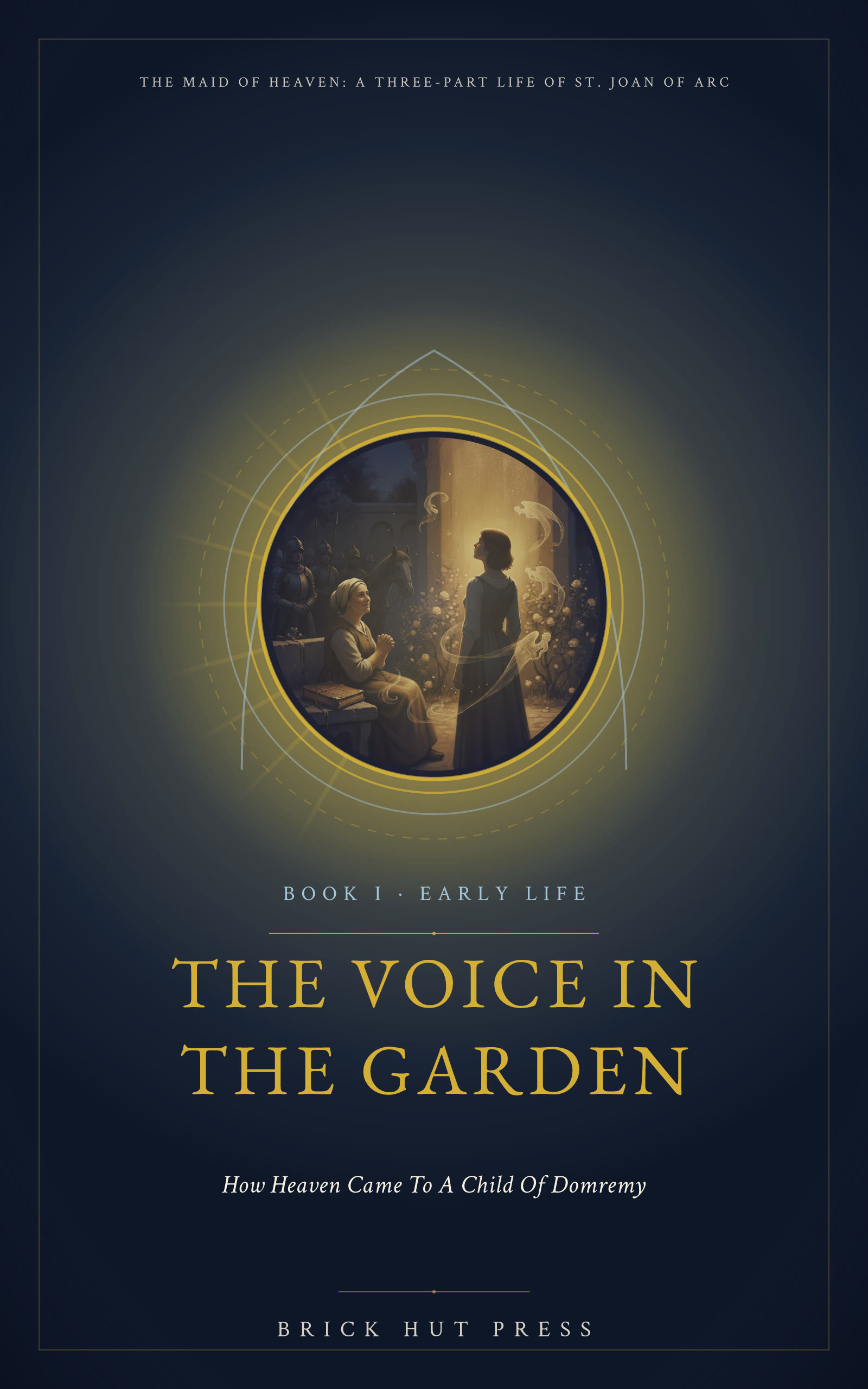
The Voice in the Garden
Before the armor. Before the banner. Before the battlefield, Heaven was already speaking. In the quiet river valley of Domremy, a farmer's daughter heard something no one else could hear, and everything that would shake the thrones of Europe began in that stillness. The Voice in the Garden: How Heaven Came to a Child of Domremy opens the hidden years of Joan of Arc: the sacred formation that happened long before the armies, the trial, and the fire.
Read the full description
This is not a book about war. It is a book about a calling, how it arrives, how it grows, and what it costs to say yes when the world has given you every reason to stay silent. The village God chose, the fields, the church, and the rhythms of Domremy that became the soil of extraordinary holiness Jacques and Isabelle, the human story behind the icon, rendered with warmth and historical faithfulness The Voices and the three saints who kept watch, a reverent exploration of Joan's mystical experience, grounded in Catholic tradition Five years of interior formation, the patient, hidden work of grace that prepared a teenager for one of history's most astonishing summons The road to Vaucouleurs, refusal, perseverance, and the moment a commander believed A kingdom falling and a girl rising to answer, the collision of France's darkest hour with one soul's obedience Joan of Arc has been claimed by soldiers, nationalists, feminists, and romantics across six centuries. Here she is returned to her first and truest identity: a child of the Church, a daughter of Domremy, a soul formed in hiddenness before she was revealed to the world. She who could not read, whom God had taught, her answer begins in a garden, with a voice, and with a girl who chose to believe that what Heaven asked was worth everything.
About this volume
This first volume takes up the years before the banners and the battlefields, the years almost no life of St. Joan of Arc lingers over, and asks what it meant to grow up as a child of Lorraine in a country tearing itself apart. Domremy was not a peaceful village occasionally interrupted by war; it was a war village that occasionally knew peace, and the book insists on that distinction from its first pages, because it shapes everything that follows. A girl who fled her burning parish church at thirteen was not being prepared for holiness in a garden of untroubled innocence. She was being prepared in fire, in flight, in the ordinary terror of the Meuse valley, and it is precisely there, the volume argues, that Heaven chose to speak to her.
The chapters move with unhurried attention through the ground of that childhood: her father Jacques and her mother Isabelle, the plain devotions of a farming household, the early and unremarkable piety of a child who "already loved God" before anything remarkable happened to her at all. This is deliberate. The book wants the reader to sit with the ordinariness before it gives way, so that when the First Voice comes, in the chapter of that name, in the garden beside her father's house, it arrives as Heaven arriving in a real place, to a real girl, rather than as a legend materializing out of nowhere. The three saints who kept watch over her after that first summons, Saints Michael, Margaret, and Catherine, are treated here not as decorative apparitions but as the beginning of a five-year formation, a long apprenticeship in obedience and discernment that the volume traces with real patience, chapter by chapter, refusing to compress it into a single dramatic scene.
Threaded through this interior story is the outer one: the kingdom falling, the English and Burgundian armies pressing in, the disinherited Dauphin, the sense, shared by ordinary people up and down the Loire and the Meuse, that France itself might not survive. The book holds these two threads together on purpose, because Joan's own testimony held them together. Her voices did not come to her apart from the wreck of her country; they came to her inside it, insisting that she had a part to play in its rescue. The volume takes seriously her hesitation, her fear, and the sheer unlikelihood of what was being asked of a farmer's daughter who had never held a sword or sat a warhorse.
The second half of the book follows her first attempt to answer that call: the road to Vaucouleulesurs, the blunt refusal of Robert de Baudricourt, the long months of waiting that must have felt, to a girl of sixteen or seventeen, like Heaven itself had gone silent. Then comes the return, the second journey, and the change in Baudricourt from skepticism to belief, rendered here not as a plot device but as the hinge on which the entire mission turned. The volume closes on a chapter that asks its central question outright: how could a girl who could not read be so certain of what she had been taught, and by whom? It does not resolve that mystery by explaining it away. It sits with it, in the same spirit the whole book asks of its reader.
This is the first of three volumes, and it ends before Chinon, before the armor, before Orleans, deliberately. What it offers instead is the slow, grounded story of a vocation taking root: a village, a family, a war, and a Voice that would not let a child of Domremy rest until she had answered it. Readers who come to St. Joan of Arc already knowing the battles will find here the quieter, harder-won ground beneath them.
Not sure yet? Begin freely.
The Maid Who Was Not Afraid, a complete portrait of this life, free, kept in your own library here. The door into all 3 volumes.
Receive the free book →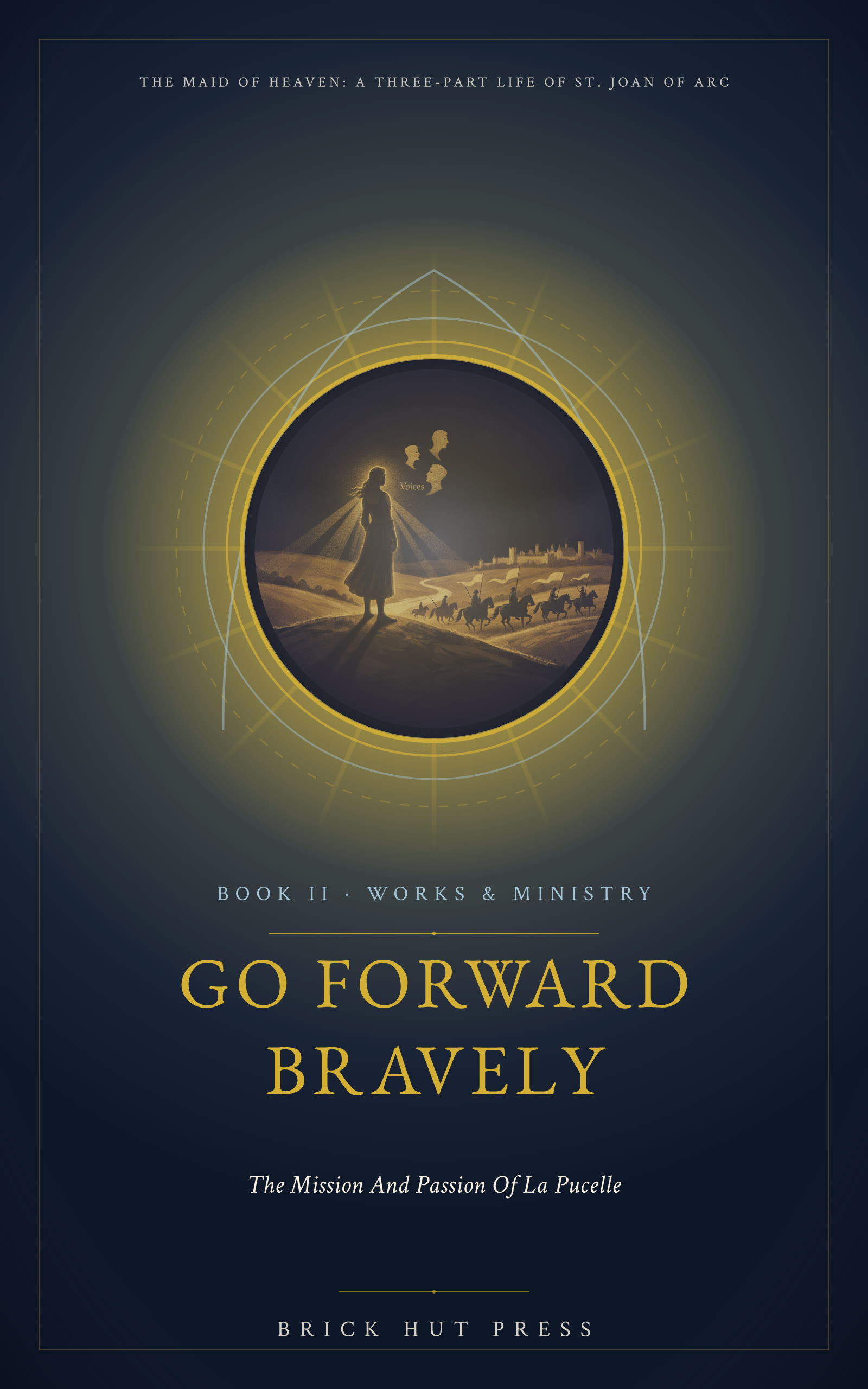

Lives that walk beside St. Joan of Arc, chosen for their likeness, not their fame.