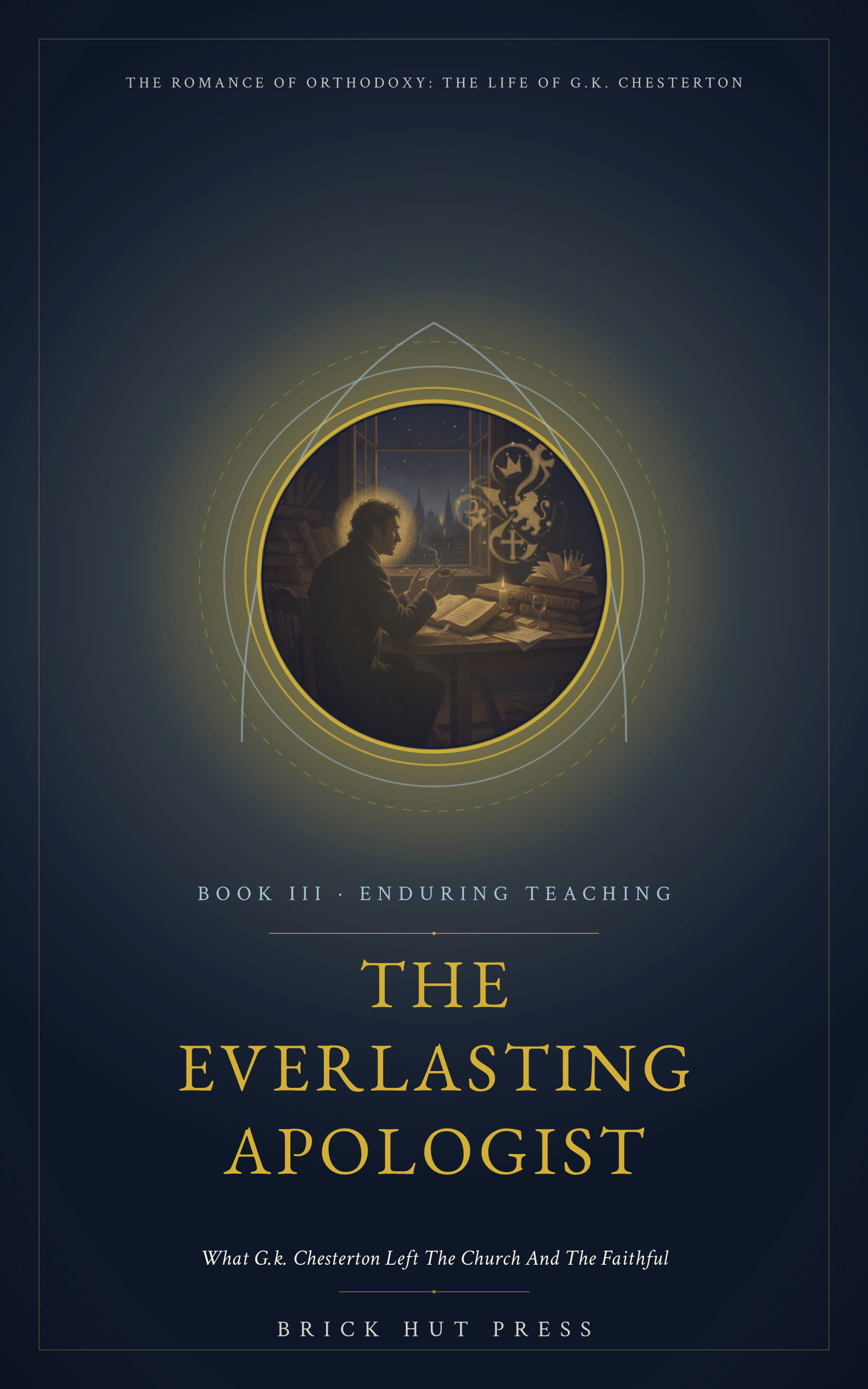
The Everlasting Apologist
He Has Not Stopped Converting People Since.
He Died in 1936. He Has Not Stopped Converting People Since. Some writers inform. A rare few transform. Gilbert Keith Chesterton belongs to that almost impossibly small company of souls whose words reach across decades, slip past every defense, and land somewhere so deep inside the reader that nothing is quite the same afterward.
Read the full description
If you have ever read Orthodoxy by lamplight and felt the strange, electric sensation that someone had put your own half-formed convictions into sentences more beautiful than you could have managed, this book was written for you. The Everlasting Apologist is a devotional celebration of Chesterton's living legacy: the philosophy, the faith, the irrepressible joy, and the remarkable fact that a portly Edwardian journalist with a swordstick and a taste for cheap wine continues, long after his death, to shepherd restless minds into the arms of the Church. This is not a dry biography or an academic survey.
Not sure yet? Begin free.
The Giant in the Doorway, a complete book about this life, free, kept in your own library here, read now; its narration joins free when it is finished.
Receive the free bookAbout this volume
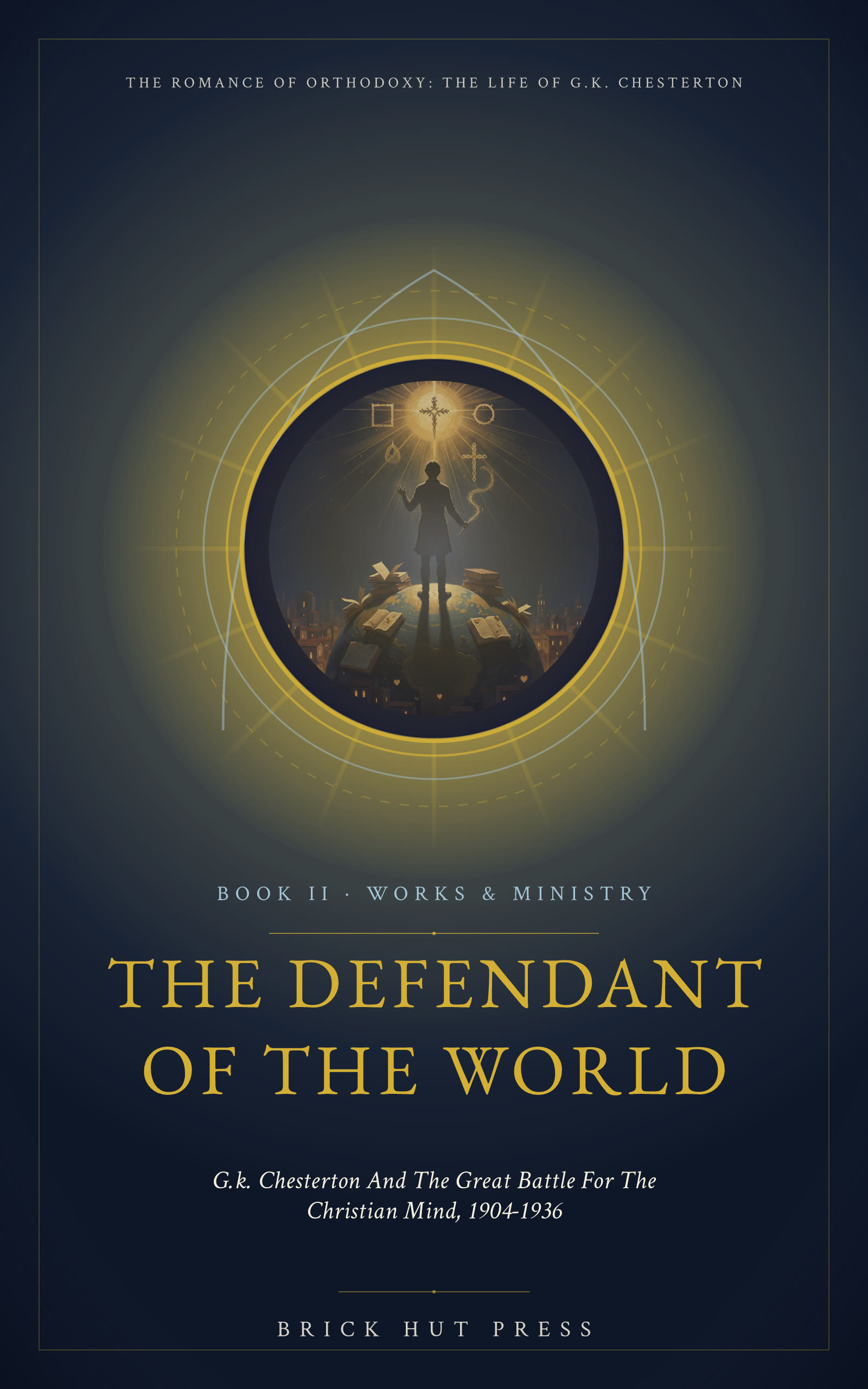
This is the third and closing volume of The Romance of Orthodoxy, and it asks a different question than the two that came before it. Where the earlier books followed Gilbert Keith Chesterton through the streets of Kensington and Fleet Street, through his marriage to Frances and his long argument with doubt that ended at the altar of Rome, this volume stands at the grave in Beaconsfield and asks what was left behind when the enormous man in the enormous coat finally stopped talking. The answer, as the chapters here make plain, is that he did not stop talking at all.
The book opens, fittingly, in the churchyard of St. Teresa's, with the plain grey slab that gives nothing away, and from there it moves outward in widening circles: to Beaconsfield itself and the surprising debt that C. S. Lewis and the whole Narnian imagination owe to the house called Top Meadow; to the philosophy of wonder that Chesterton called the forgotten virtue, the conviction that astonishment at a sunset or a potato is not childishness but clear sight; to his paradoxes, which the book insists on reading not as clever tricks but as the only honest way to speak about a world stranger than logic. These early chapters are less biography than inheritance, an accounting of what kind of mind he left the Church and the world, and why that mind still startles readers who meet it for the first time on a train platform or in a secondhand bookshop.
From there the volume turns to the specific gifts, the things a reader can hold. There is a chapter on the sacrament of the ordinary, tracing how common things, a yellow door, a glass of beer, a child's toy theatre, became for Chesterton occasions of the living God rather than distractions from Him. There is a chapter on Orthodoxy itself, read here as romance and adventure rather than argument, the book that convinced a generation that belief could be thrilling rather than merely dutiful. And there is a generous chapter on Father Brown, the small shabby priest-detective who understood, as his creator did, that mercy requires first understanding exactly how a sinner thinks, because the confessor and the confessed are closer kin than either likes to admit.
The volume does not shy from the parts of Chesterton's legacy that are still being worked out. A chapter on Distributism takes seriously his insistence that property widely held is property that restores dignity, and asks what that vision might still say to an age of concentrated wealth and scattered ownership. Another chapter follows the custodians, the societies and scholars and ordinary readers, who kept his fire burning through decades when he fell out of fashion. And the book arrives, without rushing, at the question many readers are waiting for: is he a saint? The chapter on his cause does not presume to answer for Rome, but it lays out honestly what has been asked, what has been found, and what remains unresolved, in the same spirit of fair argument Chesterton himself brought to every debate he ever entered.
The closing chapters turn toward harvest and friendship. One traces the conversions, classroom encounters, and quiet rediscoveries that keep bringing new readers to his door nearly a century after his death. The last offers something more intimate still: counsel on how to read him not as a monument to be studied but as a friend of the soul, the kind who makes you laugh before he makes you think, and makes you think before you notice you have begun to pray. Readers who have walked through the first two volumes will find here the fitting close of the road. Readers meeting Chesterton for the first time will find an honest, affectionate map of why he refuses to stay buried.

Lives that walk beside Gilbert Keith Chesterton, chosen for their likeness, not their fame.