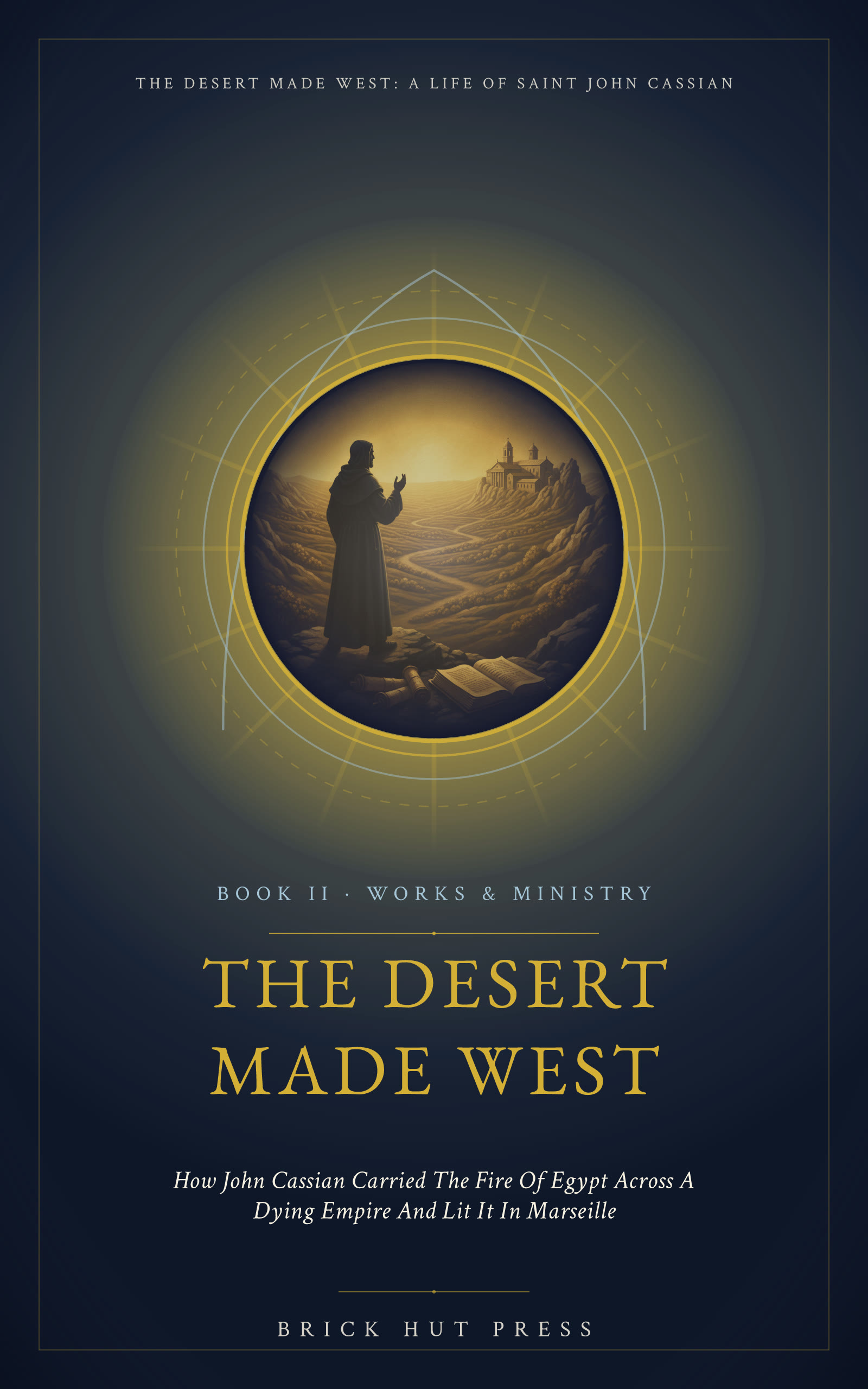
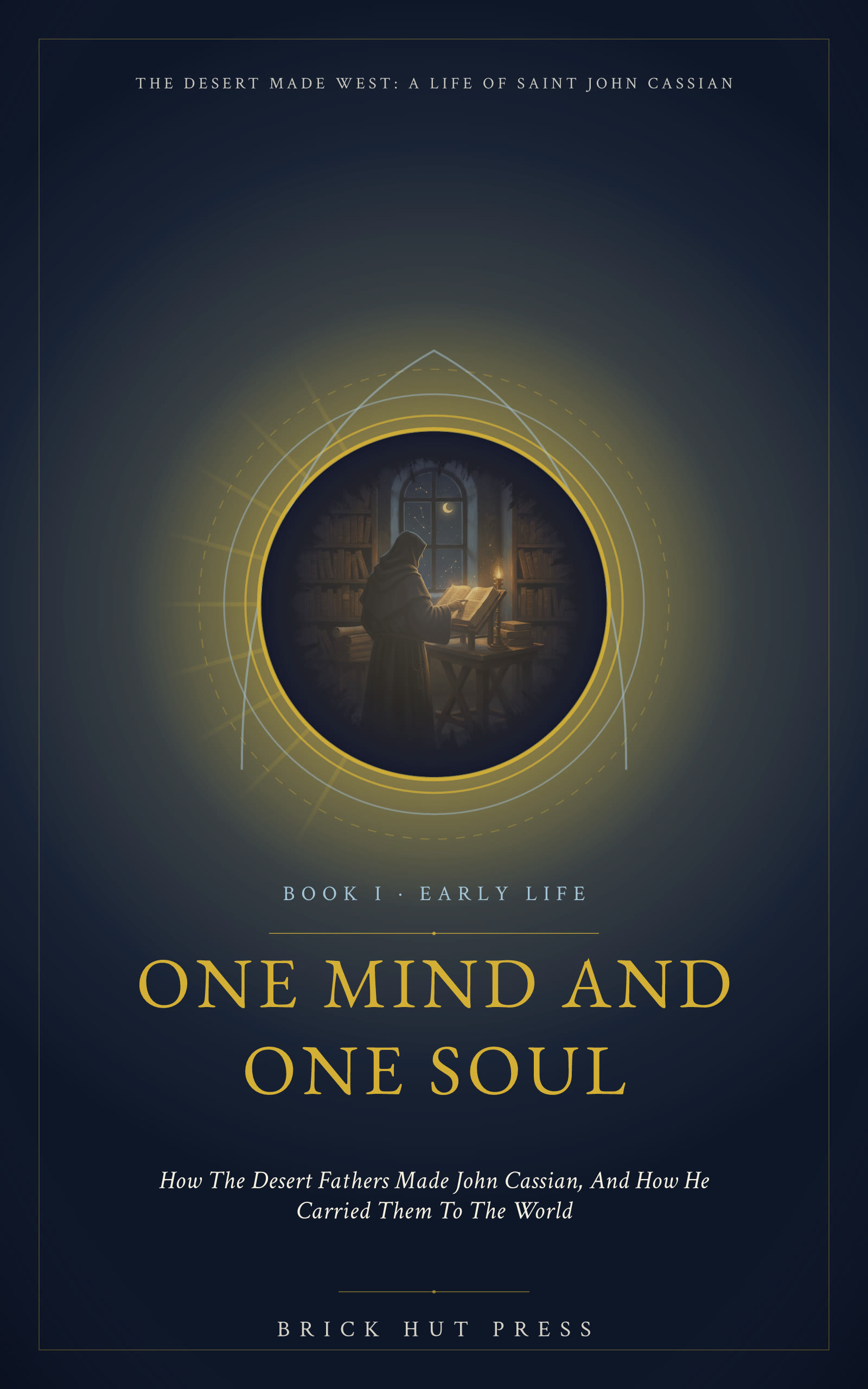
The Desert Made West
John Cassian crossed a crumbling empire to bring that fire to the West.
One Man. One Fire. A Journey That Shaped Christian Contemplation Forever. He walked out of Egypt carrying something priceless, the living wisdom of the desert fathers, earned in silence, tested in sand, forged in years of apprenticeship to the greatest contemplatives the ancient world had ever known. John Cassian crossed a crumbling empire to bring that fire to the West. And in a small harbor city on the coast of Gaul, he set it down and let it burn. It has never gone out.
Read the full description
The Desert Made West is a warm, unhurried account of one of Christianity's most consequential and underappreciated journeys, and an opening of Cassian's essential teachings as living instruction for anyone practicing interior prayer today. Whether you are a Benedictine oblate, a layperson drawn to contemplative spirituality, or simply someone who has ever felt the strange tug of the desert, this book was written for you.
Not sure yet? Begin free.
The Man Who Carried Egypt West, a complete book about this life, free, kept in your own library here, read now; its narration joins free when it is finished.
Receive the free bookAbout this volume
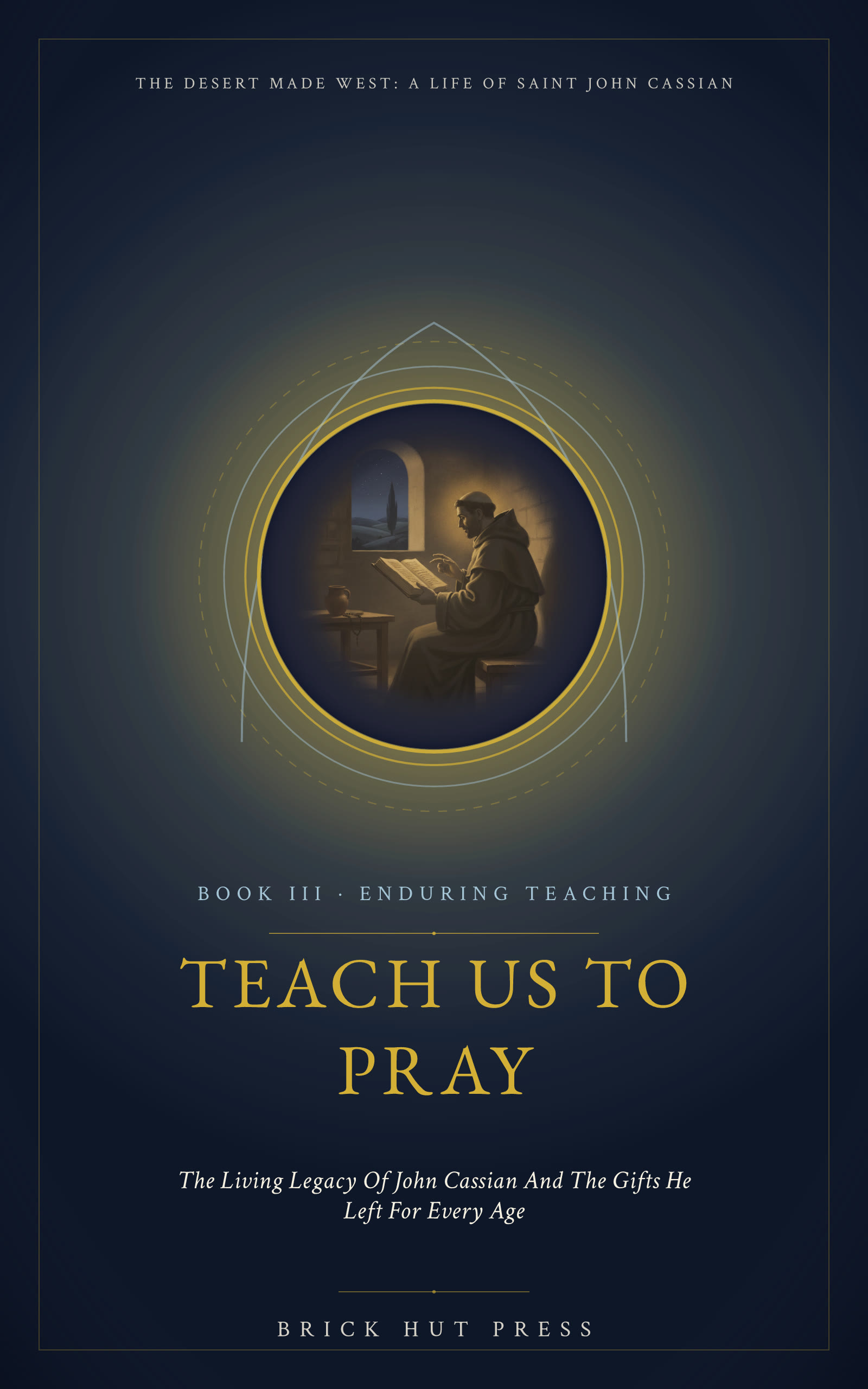
This second volume opens where the desert closes behind him. Saint John Cassian, formed in the strict silence of Nitria and Scetis, steps off a ship into Constantinople in the autumn of 399, carried there not by ambition but by the collapse of the world he had known. What follows is the story of a monk who never stopped being a monk even as he was drawn, almost against his will, into the center of an empire coming apart: ordained deacon by Saint John Chrysostom himself, sent on a desperate mission to Rome when his bishop and friend is driven into exile, and left, afterward, with nowhere certain to return to. Readers who come to this volume wanting to understand how a man of the Egyptian desert became one of the architects of Western monasticism will find here the hinge of that transformation, the years when Cassian stopped following others' roads and began to build his own.
The middle chapters follow him to Gaul, to the harbor city of Marseille, where he founds Saint-Victor and begins to write. This is the volume's true center of gravity: not the politics of Rome or the burning of a city, though both are here, but the quiet, deliberate work of translation, how a wisdom learned in the cells of Scetis might be made to live in a Latin-speaking, increasingly fragile West. The Institutes and the Conferences take shape in these pages not as abstractions but as living responses to the brothers gathered around him, men who had never seen the desert and needed a rule suited to beginners, and then, further on, needed the deeper conversations Cassian had once had with Abba Moses and the other Fathers, conversations he now sets down so that others might sit at the same table.
The volume does not shy from the difficulty of this teaching. A full chapter is given to purity of heart, the single thread Cassian insists holds the whole ascetic life together, and another to acedia, the noonday devil, that peculiar weariness of soul that strikes the monk at midday and whispers that the cell, the rule, the whole labor of stillness is pointless. These are not antiquarian curiosities. They are presented as Cassian meant them, as a map of the interior life drawn by someone who had walked it himself and watched others falter on it. The reader looking for practical, unsentimental guidance on prayer and discouragement will find Cassian's voice here at its most direct.
Later chapters turn to controversy, and the volume treats this with the same patience it gives to the desert years. Cassian's walk along the edge of the grace controversy, caught between the memory of Pelagius's errors and the harder edges of a doctrine he felt went too far the other way, is given room to breathe rather than resolved too quickly. So too his late engagement against Nestorius, an old monk drawn once more into the controversies of the wider Church, answering a young and rising archdeacon with the authority of someone who had spent a lifetime thinking carefully about Christ and grace together. These are presented not as footnotes to his monastic teaching but as its natural extension, the same discernment applied to doctrine that he once applied to thoughts in a monk's heart.
The volume closes with the school at Saint-Victor outlasting the empire that had seemed, in its opening pages, to be burning around it. Readers will leave this book with a clear sense of how a single life, uprooted from Egypt and replanted in Gaul, became a channel through which the desert's wisdom passed into the whole of Western monastic practice, read by Benedict, read still today by anyone who takes up the discipline of prayer and stillness. It is a volume for readers who want the substance of that transmission, not merely its legend.
Lives that walk beside Saint John Cassian, chosen for their likeness, not their fame.