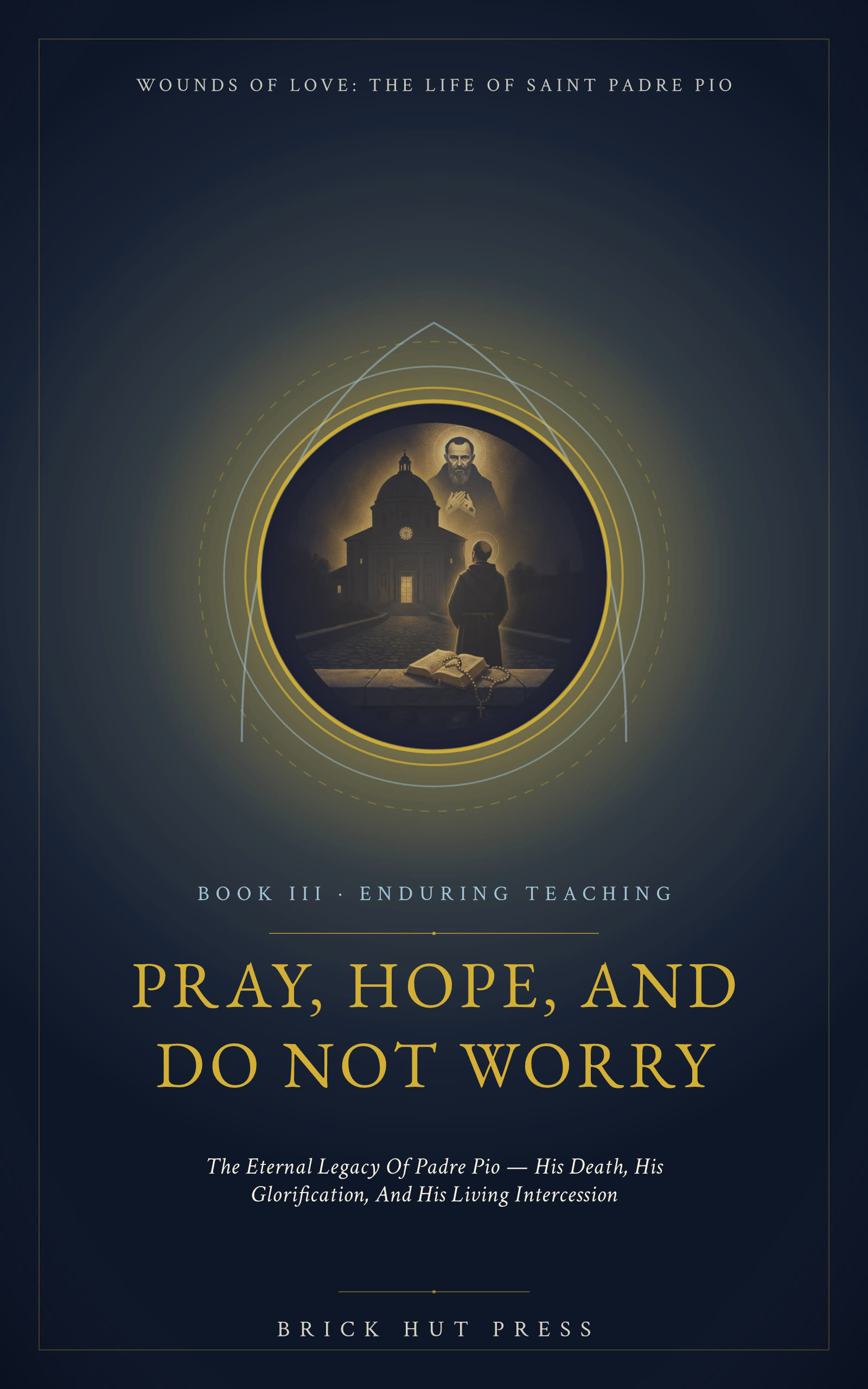
Pray, Hope, and Do Not Worry
There is a reason millions of Catholics still whisper his name in their darkest hours. Padre Pio of Pietrelcina was not simply a holy priest from the hills of southern Italy. He was a man transfixed by suffering, transformed by the Eucharist, and marked, literally, visibly, painfully, with the wounds of the crucified Christ. For half a century he carried the stigmata. And when he finally laid down that sacred burden and breathed his last, the story did not end.
Read the full description
It had only reached its turning point. Pray, Hope, and Do Not Worry: The Eternal Legacy of Padre Pio moves through the full, extraordinary arc of his death, glorification, and living intercession, from the mystery of his last Mass to the worldwide pilgrimage of devotion that continues without pause. His final days and last Mass, the profound reality of Padre Pio's death, and the morning the stigmata wounds were gone One hundred thousand mourners, the massive witness of the faithful who gathered at his funeral The cause that could not be stopped, the Church's path toward canonization, and the day Rome wept as he was declared a saint of the whole Church The Eucharist as the center of everything, how the Mass was not performance but the very life of this saint Confession as encounter, why thousands crossed continents to kneel before him, and what his ministry at the confessional reveals about mercy Suffering as sacred gift, how Padre Pio understood pain as participation in the Passion of Christ Prayer as oxygen, his own words on the necessity and power of unceasing prayer The pilgrimage that never ends, the living intercession of a saint whose faithful have never stopped coming Padre Pio never turned away a broken soul.
About this volume
This third volume of Wounds of Love opens where a lesser account might end: at the deathbed. But Brick Hut Press has always understood that for the saints, death is not a conclusion but a threshold, and this book treats September 22, 1968, not as a closing scene but as the hinge on which the whole of Padre Pio's afterlife swings open. The bells of Santa Maria delle Grazie, the crowds pressing through the piazza before dawn, the friar shuffling toward the altar on legs swollen with edema, these are the last images of the man as flesh and blood. What follows in these pages is the far stranger, far more consequential story of what the Church, and the world, made of him once he was gone.
The volume moves with deliberate patience through the days immediately after his death. Chapter Two lingers on one of the most quietly astonishing details in the whole record: the morning the wounds were gone, the stigmata that had marked his hands, feet, and side for fifty years vanished from his body without scar or trace, as if the wounds had been on loan and were now returned. Chapter Three carries the reader into the funeral itself, where a hundred thousand people converged on San Giovanni Rotondo, a farming town that had never before and has never since seen anything like it. These early chapters are not content to marvel from a distance; they ask what it meant that so many ordinary people, farmers, mothers, soldiers, priests, recognized in this one Capuchin friar something the institutional Church would spend decades formally confirming.
That confirmation is the spine of the volume's middle section. The Cause That Could Not Be Stopped traces the long, often contested road of Padre Pio's cause for canonization, a process that had to reckon with decades of suspicion, ecclesiastical investigation, and the friar's own controversial years under restriction. The Day Rome Wept brings the reader to Saint Peter's Square for the canonization itself, and A Saint of the Whole Church considers what it meant for Rome to declare, finally and officially, what San Giovanni Rotondo had believed all along. This is not hagiography that shies from the difficulty of the record; it is a book confident enough in its subject to show the Church working slowly, carefully, toward a truth it eventually could not deny.
But the heart of Pray, Hope, and Do Not Worry lies past the canonization, in the chapters that turn from history to spiritual inheritance. The Eucharist Was His Life, Come to the Confessional, and Prayer Is the Oxygen of the Soul are not biographical chapters so much as instructional ones, drawing the reader into the disciplines that shaped Padre Pio's own soul and that he pressed, with characteristic bluntness, upon every penitent who came to him. Suffering Is a Gift Wrapped in Thorns takes up the hardest of his teachings, the conviction that pain borne in union with Christ is not waste but offering, a claim that only carries weight coming from a man who bore visible wounds for half a century.
The volume closes where devotion always must: in the present tense. Its title chapter, Pray, Hope, and Do Not Worry, gathers his most beloved counsel into something like a rule of life, plain enough for a child and demanding enough for a lifetime. The Pilgrimage That Never Ends looks at San Giovanni Rotondo today, still filled with pilgrims decades after that gaunt friar celebrated his last Mass, and asks what it means that his intercession is understood by so many not as a memory but as an ongoing, living help.
Read as the conclusion of a three-volume life, this book asks the reader to hold together two facts that Catholic tradition has never separated: that Padre Pio was a man who suffered terribly and died, and that death did not end his nearness to those who call on him. It is a fitting close to the series, and an honest invitation into a devotion still very much alive.
Not sure yet? Begin freely.
Marked by Love, a complete portrait of this life, free, kept in your own library here. The door into all 3 volumes.
Receive the free book →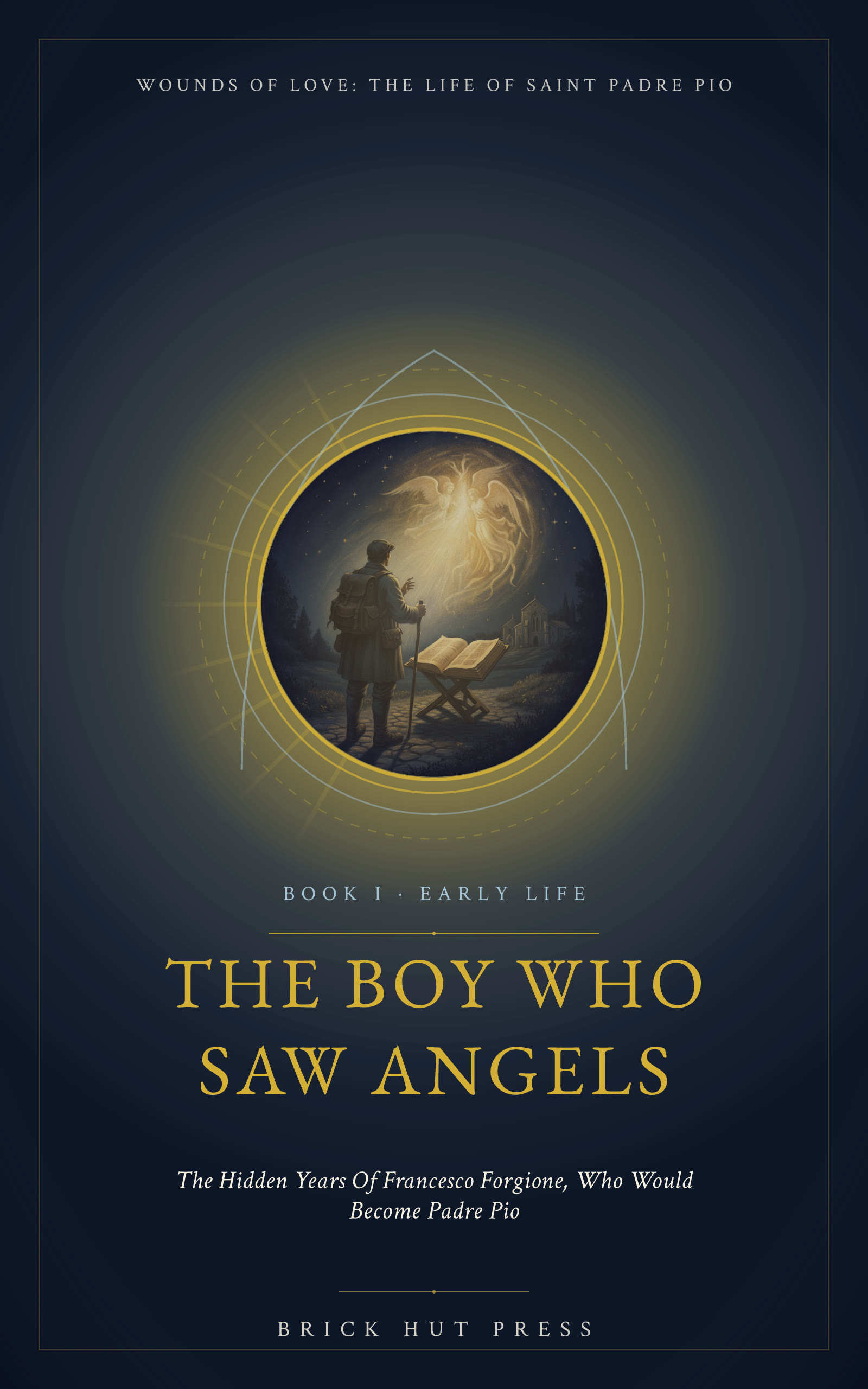
Lives that walk beside Saint Pio of Pietrelcina, chosen for their likeness, not their fame.