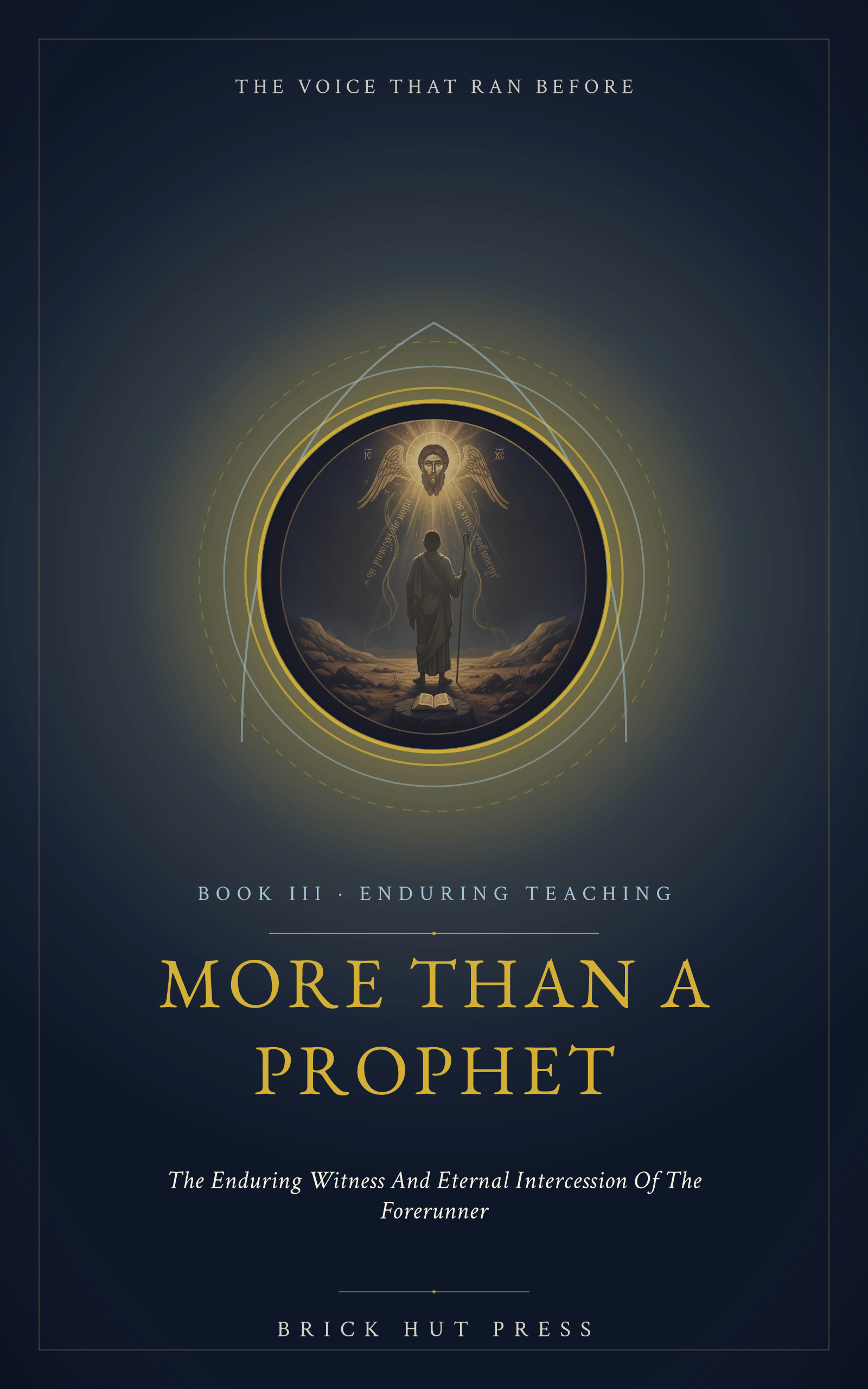
More Than a Prophet
He Is Not Silent. He Is Still Crying in the Wilderness, and He Is Still Pointing to Christ. John the Forerunner is not a figure sealed inside history. He is a living witness, an eternal intercessor, the one who stands at the right hand of Christ and continues, right now, to do what he has always done: point beyond himself and ask the question that changes everything: what are you doing with the One I announced?
Read the full description
More Than a Prophet completes the Forerunner’s life where the tradition insists it truly unfolds: beyond the grave, in the Church’s living memory, his icons, his feasts, his relics, his intercession. Written from within the tradition, warm, learned, and unhurried, it moves you from knowing about John to genuinely knowing him. Friend of the Bridegroom, the Forerunner’s enduring teaching of holy diminishment: he must increase, but I must decrease , as a whole way of life. Standing at the Right Hand, the Deisis: what the great icon of John beside Christ reveals about his place in heaven and his nearness to us. The Three Findings of the Precious Head, the astonishing history of his relics and the centuries of veneration that kept their witness alive. Six Feasts, One Life, the Nativity, the Synaxis, the Beheading, the Findings: how the Church year returns to the Forerunner again and again, and why. Father of Monastics, Angel of the Desert, how the first citizen of the wilderness became the pattern for every ascetic who followed. Book Three of The Voice That Ran Before: A Life of Saint John the Forerunner, for the faithful who have stood before his icon and hungered for a richer encounter, for catechumens drawn to his fierce and tender witness, and for every reader who honours the Prophet and Precursor.
About this volume
This is the third volume in a series devoted to Saint John the Forerunner and Baptist, and it opens exactly where a life ends and a cult of veneration begins: at Machaerus, with a body given hasty burial by frightened men, and a piece of news carried down a dusty road to Jesus of Nazareth. Where the first two volumes of this series presumably traced his conception, his desert years, and his ministry at the Jordan, this book takes up a harder and in some ways more searching question: what does the Church make of a prophet after death silences his voice? The answer, chapter by chapter, is that death did nothing of the kind.
The early chapters work through the titles the Church has given him and asks what they cost him and what they mean for us. "Friend of the Bridegroom" and "Patron of the Baptised" root his identity in the sacrament he is forever associated with, while "Let the Coats Be Shared" returns to his preaching at the Jordan to show that his call to repentance was never abstract, it demanded bread given, coats shared, tax collectors and soldiers made honest in the particulars of their trades. This is metanoia as the Forerunner preached it: unglamorous, practical, and aimed at the heart through the hands. From there the book turns to the verse that has shaped more Christian self-understanding than perhaps any other single sentence he spoke: "He must increase, but I must decrease." A full chapter is given to this, not as a resigned surrender but as a joy, the peculiar gladness of a man who measured his life's success by how thoroughly it pointed away from itself.
The volume then moves into territory less familiar to readers who know John only from the Gospels: his standing as father of monastics and angel of the desert, the strange and moving history of the Three Findings of his venerable head, and his fixed place at the right hand of Christ in the Deisis icon, where he stands forever in the posture of intercession alongside the Theotokos. These chapters take seriously what it means that an entire iconographic tradition places him there, unmoving, at the center of the Church's visual theology of judgment and mercy. Readers who have wondered why Tuesday carries a particular weight in Orthodox liturgical memory, or why six separate feasts across the calendar year belong to one man, will find those questions addressed directly and without impatience, the weekly remembrance and the six feasts are treated not as calendrical curiosities but as the Church's sustained, deliberate refusal to let his voice go quiet.
What holds the volume together is its title's claim: that John is more than a prophet, in the sense Christ himself gave to that phrase. The book does not flatten him into a historical footnote to the Incarnation, nor does it inflate him past what Scripture and the Fathers actually say. Instead it follows the Church's own instinct, carried across centuries of hymnography, iconography, and monastic devotion, that the Forerunner's work did not end at Machaerus. His voice, this volume argues, still runs ahead, into the desert, into the icon screen, into the Tuesday services quietly kept in parishes that may have forgotten why Tuesday is his day.
The final chapter turns outward, asking what it means to hear that voice ring in every age, including this one. Readers who came to this series for the desert asceticism and the thunder at the Jordan will find those things honored in memory here, but the center of gravity has shifted toward veneration itself, toward the question of how a Church continues to live with a saint once his earthly ministry is finished. For those drawn to Orthodox liturgical life, to the theology of the icon, or simply to the strange durability of a voice that would not stop even when its body could no longer speak, this volume offers a patient and reverent accounting of why the Forequarters still calls him, without qualification, the greatest born of women.
Not sure yet? Begin freely.
The Lamp Before the Light, a complete portrait of this life, free, kept in your own library here. The door into all 3 volumes.
Receive the free book →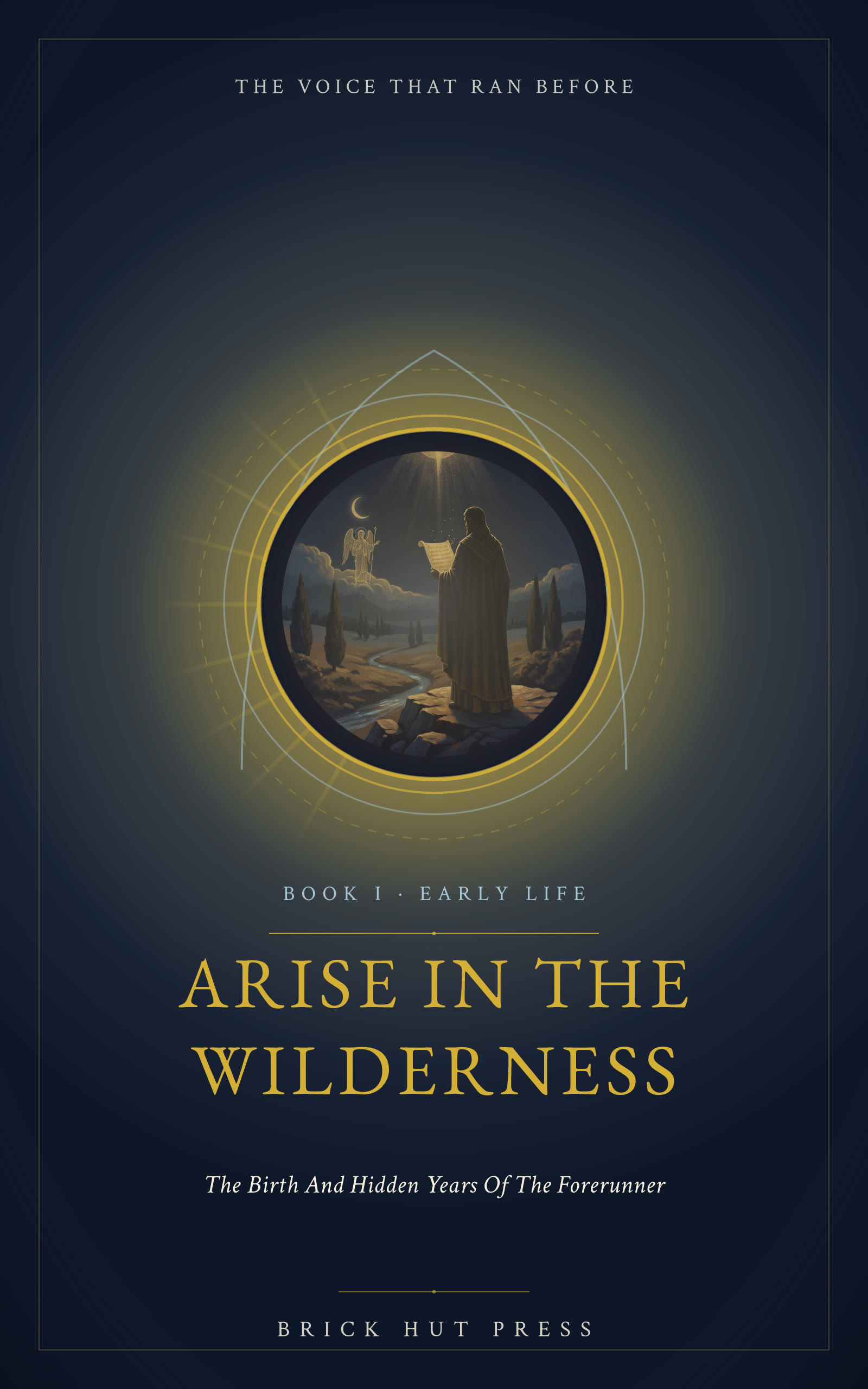
Lives that walk beside Saint John the Forerunner and Baptist, chosen for their likeness, not their fame.